
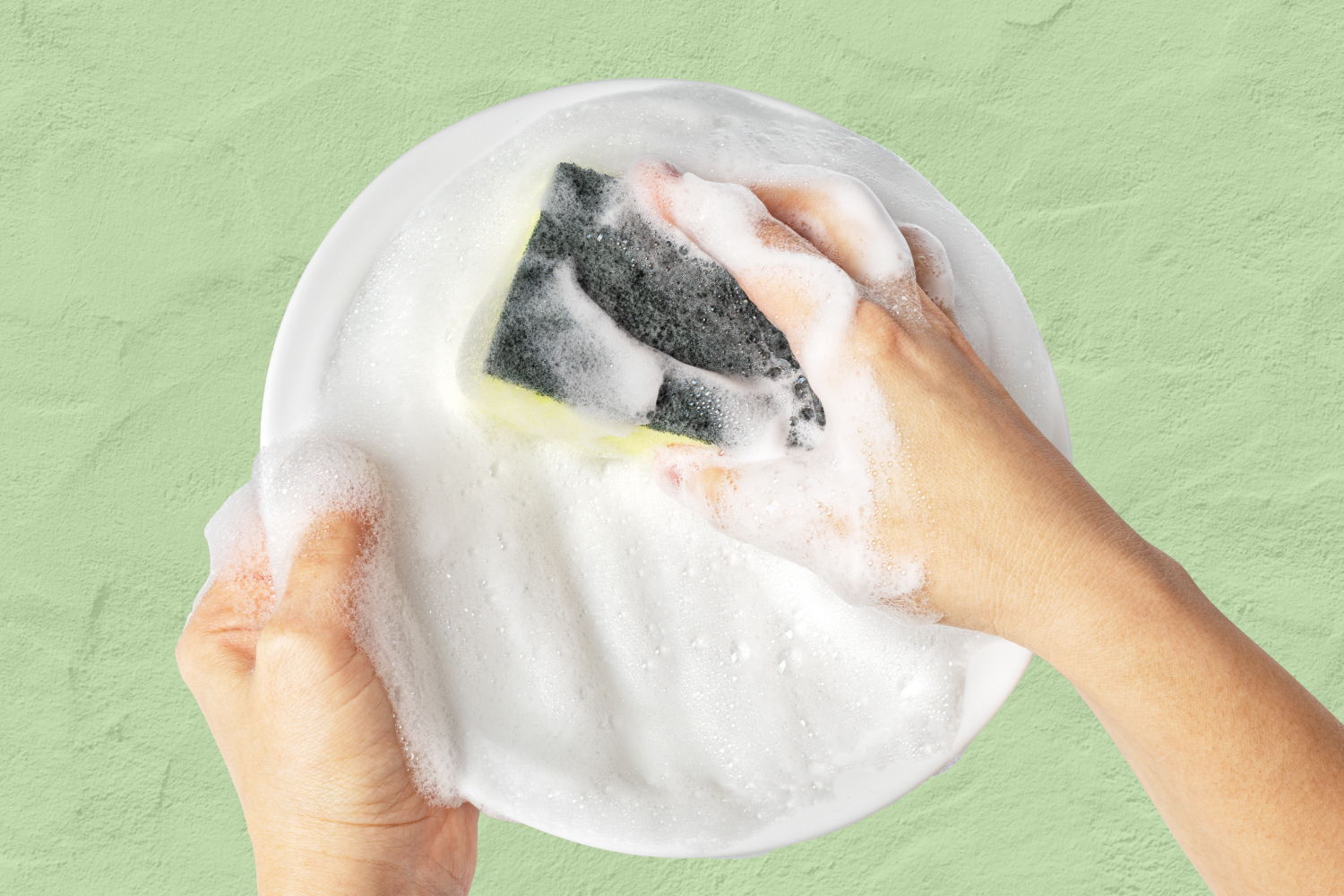
The most efficient way to clean your dishes is to run a full Energy Star–certified dishwasher load on its “eco” setting. Even so, a sponge remains an essential part of a kitchen arsenal—called upon to scrub sheet pans, countertops, sinks, Dutch ovens, and delicate items unsuitable for machine cleaning. But conventional kitchen sponges aren’t so clean. Even the best dish sponges tend to wear out quickly and retain odors. They’re often made from petroleum-based foam, which can shed microplastics. And, because of their makeup, they’re destined to rot in landfills once their scrubbing days are done.
Sponges made from natural materials offer a promising alternative. While they look and feel like common scrubbers, these sustainable sponges are made from wood fibers and feature natural abrasives like coconut husks, loofah, and walnut shells. While some do include recycled plastic, their overall environmental profiles are still an improvement. They also dry faster, fight odor, and tend to be more durable than the traditional square.
Naysayers would have you believe that all of these sponges are but crunchy facsimiles of their conventional counterparts. The truth: There’s a wide range of scrubbers in the world of sustainable sponges.
So, to understand which ones were worth using, we tested four popular options side-by-side. We evaluated their scrubbing power, durability, dry time, and odor retention, and also dug into how well they—and the companies who make them—treat the planet.
one5c’s pick: Blueland Scrub Sponge
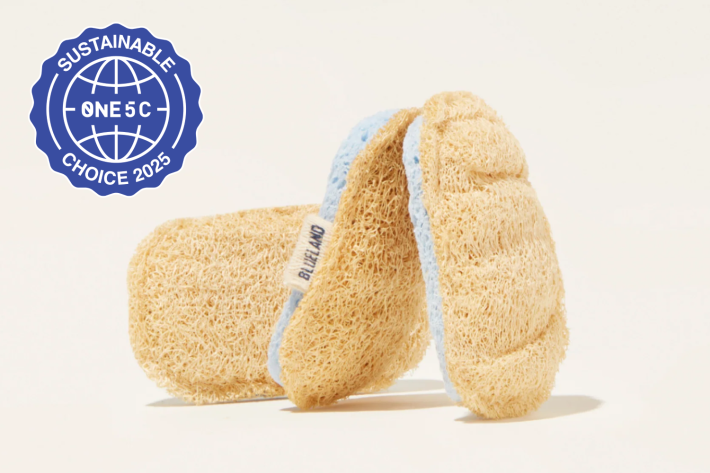
Blueland’s Scrub Sponge ($14 for 3; blueland.com) is a great plastic-free option. It’s flexible and relatively fast-drying, feels great in hand, and can handle baked-on crud quite well. The rounded scrubber—one side is made of loofah and the other of plant-based cellulose—is highly absorbent and resists odors. While it tied for third place in our performance tests (it was a very tight race), the Scrub Sponge sailed into first place overall on the strength of Blueland’s planet-forward business practices. The sponge contains zero plastic, its cellulose side comes from responsibly-sourced wood pulp, and the loofah is nothing more than some dried plant. As a company, Blueland holds a Climate Neutral certification and rates on the higher end of B-Corporations for its commitments to everything from worker welfare to conservation.
Runner-up: Grove Coconut Scrubber Sponge
Grove’s Coconut Scrubber Sponge ($5.49 for 2; grove.co) is a durable, dual-sided crud-remover that’s absorbent and reliable. The plant-based cellulose wiper has a coconut-shell-and-recycled-plastic scrubber that also dried quickly and detached all varieties of stuck-on food. It tied in performance with Blueland and rose to second overall due to the company’s sustainability commitments. Grove has science-based emissions reduction targets, and, as a certified B-Corporation, it earned strong marks on key enviro-categories like air pollution and conservation.
What sustainable sponges we tested
We settled on four widely available, double-sided sponges made from a range of plant-based materials. Their spongy side are all made from wood-based cellulose, but there’s variation in the scrubby sides: some use coconut husk, some tap walnut shells, and others opt for loofah. A couple do have some plastic, too, but we’ll get into that later on. Each runs between $1.75 and $6 per sponge.
- Blueland Scrub Sponge
- Full Circle Walnut Shell Scrubber Sponges
- Grove Coconut Scrubber Sponge
- Mater Sponge
- Public Goods Scrubber Sponge
How we picked the best sustainable sponge
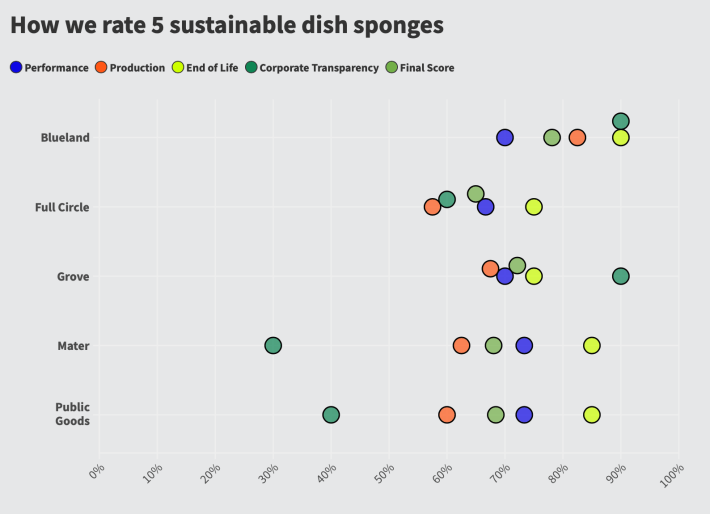
Our product recommendations are based on two parallel assessment tracks: one for performance and one for sustainability. These ratings combine to land on our final winner, which represents the ideal blend of a product that’s good for the Earth and for your life. Read more about our assessment process here.
How we tested sustainable dish sponges
We used several of each sponge in a busy household over the course of three weeks, washing everything from pots and glassware to basin sinks and countertops. We also put each sponge through three graded tests designed to measure both how well it cleaned and how well it held up over time.
- Scrub test: We put each sponge to work cleaning baked-on mac and cheese, dried oatmeal, greasy bacon residue, and a wire rack coated with oil and bits of air-fried tofu. We used ½ teaspoon of dish soap and warm water and scrubbed away. We assessed how clean the end results were, how much effort it took to lift off messes, and whether or not the sponge scratched any surface.
- Durability/odor test: Each sponge was used for nightly dishes over the course of a week, and left to air-dry between uses. We checked for fraying, softening of the scrubber side, and sniffed for any unpleasant smells.
- Dry time test: We weighed each sponge, added half of its weight in water, wrung it out, and set it on a wire rack. We then timed how long it took for each to fully dry. Sponges that retain more water tend to be more likely to develop odor and bacteria.
How we scored sustainability
Our sustainability ratings take into account three factors: a product’s environmental impact at its production, what happens at its end-of-life, and the manufacturer’s environmental behavior. Production factors in where, how, and with what raw materials a product is made—as well as how it’s transported through the supply chain. End-of-life considers any potential toxicity as well as how you dispose of the sponge once it’s spent. The final factor involves actions the company takes outside the life of a product to minimize its footprint or benefit the environment, and we award bonus points for transparency, as well. These scores are informed inferences based on available information, not full-blown life-cycle analyses.
How the Blueland Scrub Sponge performed
Don’t overthink it: A good dish sponge should effectively remove grease and food residue while being durable, gentle enough for delicate wares but tough enough for stuck-on messes, and comfortable to use. While all competitors more-or-less met these expectations—they each stayed largely intact after lots of hard scrubbing, survived multiple dishwasher sanitation cycles, and left no slimy residue in the sponge dish—the Blueland Scrub Sponge ($14 for 3; blueland.com) tied for third place in testing alongside Grove’s Coconut Scrubber Sponge ($5.49 for two; grove.co). If we didn’t factor in sustainability, The Mater Sponge ($6; matersoap.com) and Public Goods Scrubber Sponge ($18 for 12; publicgoods.com) would have been neck-and-neck for the dub.
Don’t let that make you think the Blueland sponge is somehow an inferior option, though. Its spongy cellulose side built a rich lather with just a single pump of dish soap, absorbed six times its weight in water, and dried quickly.
It’s also a solid scrubber. The loofah side is well-textured and has enough abrasive power to cut through grease, dried-on food, and sticky countertop gunk. Combined with dish soap and a little elbow grease, it made pretty quick work of even the most-stubborn bits—like casserole dishes caked with baked-on tofu remains and congealed oatmeal.
The Mater Sponge bears the most resemblance to the Blueland, with a loofah scrub side sewn to a cellulose base. It’s a solid, quick-drying scrubber that tackled heavy dirt and stains; though we did notice early signs of fraying by the end of testing and found ourselves needing to work longer on baked-on schmutz to get the same results as its competitors. It’s also pricey.
In the end, however, all the sponges fared quite well, and only a few percentage points separated first and last. The Full Circle Walnut Shell Scrubber Sponge ($4.49 for 2; fullcirclehome.com), which features cellulose and a scrubber side made from ground walnut shells and recycled plastic, also cleaned well but shed the most fibers—a double-bummer given that some of those bits are likely microplastic. The Public Goods Scrubber Sponge, made from cellulose and coconut fiber, is an A+ cleaner. The rectangular, undyed sponge is durable, and its scrubber side broke down tough stains with the fewest strokes and least effort of any of the options we tried—and shed the least of any sponge, too.
Nothing’s perfect: The loofah side of the Blueland Scrub Sponge shed a few bits during hard scrubbing, and one side began to sag away from the body like a scab. It’s a tough sponge, but heavy-duty use will likely wear it down faster than folks might prefer. The sponge is also a bit pricey at roughly $4 a piece. That drops a bit if you sign up for a subscription, but it’s still on the higher end for a sponge.
Why the Blueland Scrub Sponge is sustainable
Blueland’s sponges contain nothing you wouldn’t want coming in contact with things you eat off or with. They’re free of nasties like phthalates and formaldehyde, both of which are common in kitchen scrubbers. Crucially, along with Mater and Public Goods, they’re one of three sponges we tested that has zero plastic: Their sponge-y side is made from cellulose—a natural material derived from wood fiber—that has an Forest Stewardship Council certification for coming from responsibly managed stock; their scrubby side is dried loofa, which is just a piece of dried-out plant; and the two are stitched together with cotton thread as opposed to glue or another adhesive.
That super-clean profile means, once these sponges have scrubbed their last dish, you can cut ‘em up and toss ‘em right in the home compost. (Just make sure to rinse them clean and wash away any harsh cleaners you might have used.)
As a company, Blueland’s trophy case is packed with sustainability ribbons. Their biggest overall flex from a planet-warming POV is a Climate Neutral certification, which means they track and trim emissions and put real cash towards those goals—like, for example, getting one of their manufacturers onto 100% renewable energy. They’re also a B-Corporation with a well-above-average score across the categories that the assessment looks at, particularly metrics around resource conservation and reducing toxins.
Nothing’s perfect: In order to achieve climate neutrality, Blueland buys carbon offsets, which can be an iffy way to hit goals. While they do focus on vetted projects (for example, forest conservation in Indonesia) offsets aren’t a replacement for actual emissions reductions within the business itself. It’s also a bit of a bummer that the scrub sponges aren’t certified through Cradle-to-Cradle, a seal many of Blueland’s cleaning products have earned; that marker goes to goods that minimize impact through their entire lifecycle with a particular focus on reducing waste and the need for virgin materials.
The runner-up: Grove Coconut Scrubber Sponge
Grove’s Coconut Scrubber Sponge ($5.49 for 2; grove.co) is a rectangular, dual-sided dish-wiper that’s gentle enough for stemware and stainless steel yet tough enough to take on baked-on, soak-first messes. It’s built like a traditional sponge: One side is made of a soft, absorbent, plant-based cellulose; the other is rougher and more textured, made from ground coconut shells and recycled plastic fibers. Performance-wise, it tied with Blueland for third place
Grove’s scrubber layer did begin to split slightly after heavy use, and one tester advised using gloves when handling a fresh sponge, as the scour side can feel sharp, especially along the edges and corners.
As a company, Grove’s sustainability commitments buoyed them to the No. 2 spot. Grove is a high-ranking B-Corp and has set emissions-reduction goals through the Science-Based Targets Initiative, a group that ensures corporate climate commitments are in line with the U.N.’s target to limit warming to 1.5 degrees C. They are using carbon offsets to neutralize emissions from suppliers and a few other line items, but they are honest that buying credits now doesn’t absolve them from true emissions reductions in the long run.
As for the sponges themselves: Like Blueland, the spongy part is made from cellulose. The scrubby-y side is part coconut scour (an abundant source of agricultural waste in coconut-producing regions) and part recycled PET plastic. The latter comes with the usual red flags, like microplastic shedding and landfill rotting. But you can try to separate the business end of the sponge and toss the plant-based part in the compost. The sponges also come wrapped in plastic, which is hard to recycle unless you opt into a paid service that takes thin film.
Matt Berical is Senior Editor at one5c and a longtime writer and editor based in Richmond, Virginia.
Corinne Iozzio is the Editor-in-Chief of one5c, and an award-winning science and tech editor with more than 15 years of experience.
one5c does not earn a commission on any product purchased through our reviews.