
America’s protein obsession has reached new heights. What started with post-gym shakes and meal-replacement bars has—thanks to fitness influencers, Ozempic users and viral nutrition trends—been stuffed into nearly every item in the supermarket: pasta, chips, cereal, even seltzer. In 2024 alone, protein supplement sales grew by 9%.
Whether or not Americans are getting enough protein is a topic best left to nutritionists, but the source of the muscle builder does matter to anyone minding the environmental impact of their diet. Many popular protein supplements depend on the dairy byproduct whey. Whey production has increased steadily over the past 20 years, jumping from about 8 million pounds per month in 2003 to nearly 50 million in 2023.
That increase, partly driven by growing demand for protein supplements, has shifted dairy production priorities. In the past, whey has been largely cast as an emissions win: It was a discarded byproduct of cheese production, so using it up prevented a lot of waste. But rising demand has morphed the protein from a solution into a co-driver of dairy production alongside cheese.
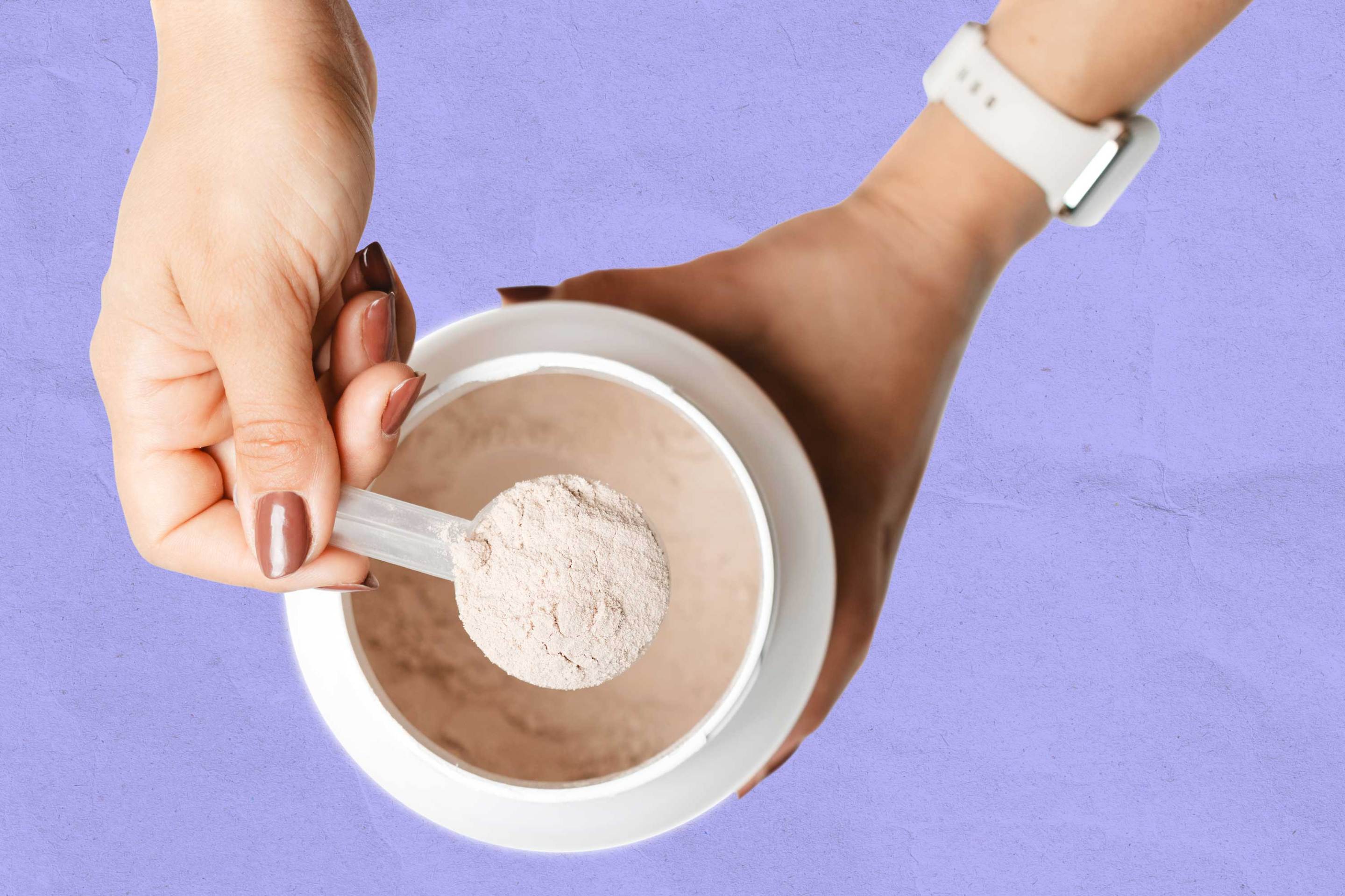
Plant-based protein powders offer a less resource-intensive alternative without sacrificing gains. Made from peas, rice, hemp, and other plants, the powders are nutritionally comparable to whey in protein content, typically offering between 15 to 25 grams per serving (though some may be lower in certain amino acids than whey), and they require fewer resources to produce. According to a 2018 lifecycle analysis published in The Journal of Food Engineering, whey protein production requires significantly more water than plant-based options like soy or pea, and plant-based proteins also generate substantially fewer greenhouse gas emissions.
Now, the caveats: Plant-based protein powders have a reputation for being gritty, overly sweet, or generally tasting like wet chalk. Some don’t blend as well as their whey-based counterparts, especially in water or baked goods.
That’s why we spent several weeks taste testing top-rated plant-based protein powders to find the ones that deliver on both nutrition and flavor—and don’t turn your post-workout power-up into a chalk cocktail. We also weighed the sustainability of each brand, from packaging practices to ingredient sourcing. The powder that makes the biggest flex is creamy, cleanly sourced, and made by a company that seems to care as much about the planet as it does your gains.
one5c’s pick: Optimum Nutrition Gold Standard 100% Plant Protein
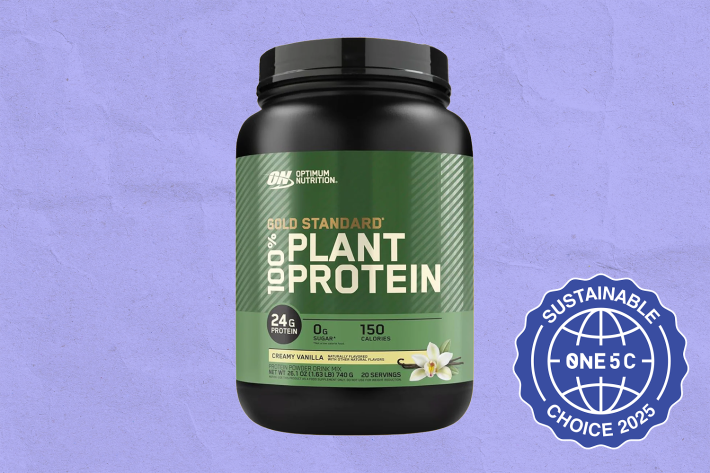
Optimum Nutrition Gold Standard 100% Plant Protein ($37 for 20 servings; optimumnutrition.com) stood out for its impressive balance of taste, texture, and planet friendliness. Unlike many plant-based powders, it’s creamy, with a smooth vanilla flavor that isn’t overly sweet or artificial. It blends well in shakes and smoothies, and testers reached for it even after our formal grading was through. With 24 grams of protein per serving and boasting all nine essential amino acids, it delivers solid nutrition, too. Plus, the brand’s parent company, Glanbia, is making meaningful sustainability strides—from packing its powder in bio-based tubs to greatly reducing waste at its production facilities—making this a protein source that’s good for both your body and the planet.
Runner up: Orgain Plant-Based Protein Powder
Orgain Plant-Based Protein Powder ($37 for 20 servings; orgain.com) impressed us with its clean and creamy taste—free from chalkiness and artificial sweetness—while offering 21 grams of protein plus 4 grams of fiber per serving. Orgain is a certified B-Corporation, meaning its business practices meet strict thresholds for social and environmental responsibility, though a majority of the company is owned by Nestle, which is a mixed bag in terms of impact: The food giant has science-based targets for emissions reductions that it’s making progress on, but it’s also one of the world’s top contributors to plastic pollution.
What plant-based protein powders we tested
Price and protein content per serving are two of the most important factors when evaluating plant-based powders. For this guide, we selected five powders that offer at least 20 grams of protein per serving, typically cost less than $2 per serving, and consistently rank highly in reviews from health and fitness publications. To standardize our testing, we used vanilla-flavored versions—but made sure all products are available in at least two or more flavors. Each powder also contains 3 grams of sugar or less per serving.
- KOS Plant-Based Protein Powder
- Naked Pea Protein
- Optimum Nutrition 100% Plant Gold Standard Protein
- Orgain Plant-Based Protein Powder
- Transparent Labs Organic Vegan Plant-Based Protein Isolate
How we picked the best plant-based protein powders
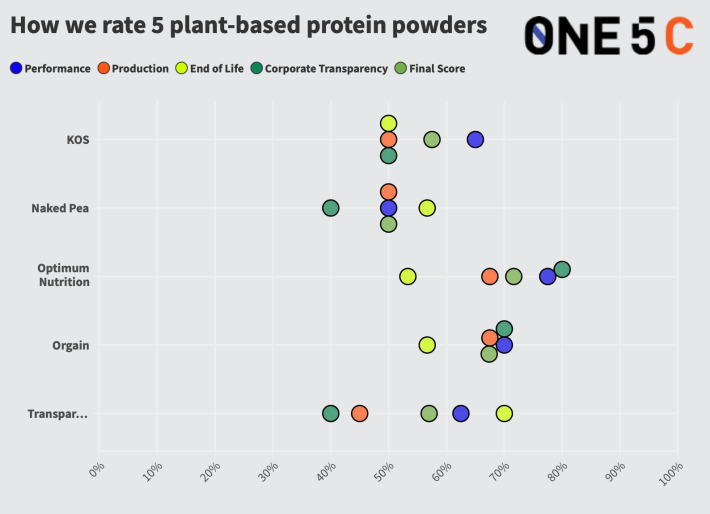
Our product recommendations are based on two parallel assessment tracks: one for performance and one for sustainability. These ratings combine to land on our final winner, which represents the ideal blend of a product that’s good for the Earth and for your life. Read more about our assessment process here.
How we tested plant-based protein powders
We evaluated protein powders over the course of four weeks, incorporating them into our daily routines to better understand how they fare in different eating and drinking scenarios. We prepared multiple shakes, smoothies, and baked goods using each product to assess flavor, texture, and versatility. We also paid attention to sweetness, aftertaste, and how well the powders held up in both hot and cold applications. In addition, we performed the following graded tests:
- Taste and texture test: We mixed one serving of each powder with water and another serving with oat milk. To bring in a range of opinions, we asked five participants to blind-taste the samples and rate them on several factors including sweetness, smoothness, grittiness, and creaminess.
- Blendability test: We tested how well each powder mixed into three liquids: oat milk, water, and a smoothie (made with oat milk, frozen berries, peanut butter, and one serving of powder). We scored each one based on how evenly the powder incorporated in the mix and how many (or few) clumps remained.
- Versatility test: We incorporated each powder into two recipes: protein muffins and overnight oats. We evaluated taste, texture, and how well the powder held up in food.
How we scored sustainability
Our sustainability ratings take into account three factors: a product’s environmental impact at its production, what happens at its end-of-life, and the manufacturer’s environmental behavior. Production factors in where, how, and with what raw materials a product is made—as well as how it’s transported through the supply chain. End-of-life considers any potential toxicity as well as what happens to the product’s packaging once the powder’s gone. The final factor involves actions the company takes outside the life of a product to minimize its footprint or benefit the environment, and we award bonus points for transparency, as well. These scores are informed inferences based on available information, not full-blown life-cycle analyses.
How Optimum Nutrition 100% Plant Gold Standard Protein performed
One of the perennial criticisms of plant-based protein powders is that they taste, well, terrible. That’s putting it kindly: Some can be tongue-coatingly mealy, while others drink like a pint of wet newspaper. They can also be overly artificial—an uncanny valley of flavor mimicry in which they resemble the real thing but still taste fake.
We’re happy to report that Optimum Nutrition Gold Standard 100% Plant Protein ($37 for 20 servings; optimumnutrition.com) vanilla flavor is, well, not delicious but pretty darn tasty. It does a good job of masking the typical plant-protein flavor, blends easily into a variety of shakes and smoothies, and tastes like a normal drink—not something you have to pinch your nose to get down
The powder—made from a combo of pea, brown rice, and fava and packing 24 grams of protein per serving—is vegan, gluten-free, and contains a full amino-acid profile. It’s creamy, with a vanilla flavor that’s close-to-normal and a texture reminiscent of a decent milkshake. It's rich without being overly sweet or leaving a strange aftertaste.
Sweetness was a problem across much of the competition. Orgain Plant-Based Protein Powder ($37 for 20 servings; orgain.com) was a bit sweeter, but also nice and creamy. Transparent Labs’ Organic Vegan Protein Isolate ($50 for 30 servings; transparentlabs.com), meanwhile, was plagued by a cloying stevia sweetness and bitter aftertaste—though the latter was decently be masked by adding more fruit to our smoothie. The KOS Plant Based Protein Powder ($60 for 28 servings; kos.com) had maybe the smoothest texture of the bunch, but its Creamy Vanilla Dream was even sweeter than Transparent Labs.
The Optimum Nutrition powder also avoids another pitfall of plant-based proteins: grittiness. While we still noticed a slightly sandy texture when we spoon-stirred a scoop into water and milk, the mix disappeared when shaken in a blender bottle or whirred into a smoothie. It went down smooth. The Naked Pea Protein ($58 for 28 servings; nakednutrition.com) struggled most in this department. While its grittiness was mostly hidden in baked goods and overnight oats, this minimalist protein—made with only yellow pea protein, natural vanilla, and organic coconut sugar—had an unappealing sandy texture in drinks. Combine that with its strong pea flavor, and it felt more like opening your mouth during a Burning Man haboob than drinking a smoothie.
Nothing’s perfect: Though Optimum Nutrition was the powder our tasters went back for again and again, it’s by no means a perfect one-to-one compared to conventional whey. We’d prefer it had a touch less stevia sweetness, and we wish it blended just a bit more smoothly. Any artificialness in its flavor profile also stands out a bit more in cold overnight oats, so keep that in mind if that’s a spot you commonly stash your protein.
Why Optimum Nutrition 100% Plant Gold Standard Protein is sustainable
Optimum lapped the competition in terms of Earth-friendliness, thanks in large part to efforts of its parent company, Glanbia, which owns a range of other nutrition brands. Glanbia has set clear targets for reducing its carbon footprint and is making steady progress toward those goals. It aims to halve emissions from its owned-and-operated facilities and energy usage (aka Scope 1 and Scope 2) by 2050 and reduce emissions across its supply and customer chain (aka Scope 3) by 25%. Between 2023 and 2024 alone, the company trimmed Scope 1 and 2 emissions by 7.5%. Currently, 71% of the electricity used across its operations comes from renewable sources.
Glanbia also deserves credit for its commitment and follow-through on addressing packaging and packaging waste. Optimum’s protein powder comes in a bio-based plastic tub. Yes, it is still plastic, but at least bioplastic is made from plants rather than fossil fuels. The firm has committed to making all of its packaging recyclable, reusable, or compostable by 2030; it’s already 84% of the way towards that goal.
The company is also working towards a zero-waste certification. According to its latest sustainability report, 97% of food waste created by Glanbia’ s facilities was repurposed into animal feed—one of the EPA’s top-ranked strategies for keeping waste out of landfills.
Nothing’s perfect: Protein powders often find themselves in the hot seat when it comes to the presence of contaminants like lead. While Optimum says its products have undergone third-party safety testing and that 100% of its facilities hold food safety certifications, it doesn’t publish those audit results publicly. More transparency would be very welcome. And, while Optimum’s protein tubs are recyclable, their black plastic lids aren’t.
It’s also worth noting that Glanbia has faced a couple past complaints related to other products in its portfolio, including misleading ingredient labels and potential lead contamination in Think! protein bars.
The runner up: Orgain Plant-Based Protein Powder
Sweet, creamy, and noticeably free of the chalkiness that plagues protein powders, the Orgain Plant-Based Protein Powder ($38 for 20 servings; orgain.com) in Vanilla Bean impressed our tasters. They also gave it high marks for mixability, with only a few clumps, and praised its nearly nonexistent aftertaste. It played well with cold oats, although its sweetness did occasionally stand out. It didn’t earn universal favorite status like Optimum Nutrition, but in terms of taste and drinkability, it held its own. One serving (two scoops, not one) delivers 21 grams of protein, 4 grams of fiber. There’s also no artificial sweeteners, gluten, or soy.
Since Nestle acquired a majority stake in Orgain in 2022, it’s difficult to tease out the company’s own footprint—and efforts to minimize it. Orgain did receive a B-Corp certification in 2022, however, indicating it meets benchmarks for social and environmental responsibility. Broadly, here’s what we do know about Nestle: According to its latest sustainability report, more than 93% of its ingredients come from deforestation-free sources, more than 95% of the energy at its facilities comes from renewables, and overall emissions are down about 20% since 2018. That’s all swell, sure, but if you’re the sort to avoid supporting major plastic polluters, Nestle is one of the world’s biggest offenders.
Matt Berical is Senior Editor at one5c and a longtime writer and editor based in Richmond, Virginia. Most recently, he was the deputy editor of the parenting site Fatherly for seven years. His work has appeared in GQ, Men’s Journal, Taste, Popular Science, and more.
Corinne Iozzio is the Editor-in-Chief of one5c, and an award-winning science and tech editor with more than 15 years of experience.
one5c does not earn a commission on any product purchased through our reviews.