

While responsible for countless arguments that begin “Alright, who loaded this thing..?” dishwashers are a luxury we’re lucky to have. They save hours of housework, prevent pruney “dishpan hands,” and save a lot of resources compared to handwashing. A 2020 University of Michigan study found that over a 10-year period, dishwashers used roughly half the water (16,300 versus 34,200 gallons) and produced fewer emissions (2,090 versus 5,620 kilograms) than old-school scrubbing.
Of course, you’ll only reap the sustainability benefits if you follow a few rules: Use a high-efficiency dishwasher, scrape food from dishes instead of pre-rinsing them, run the dishwasher only when it’s full, and skip the heated dry cycle.
Choosing the right dishwasher detergent is just as important. While dishwasher tablets and pods are popular for their convenience, many contain phosphates, synthetic fragrances, and dyes. Many popular pod-based varieties even come swaddled in polyvinyl alcohol (PVA), a dissolvable plastic. These additives wash down the drain and wind up in waterways, aquatic life, and even our own bodies.
Made with plant-based ingredients and free from unnecessary chemicals and plastic, a select class of dishwasher tablets can clean effectively without dirtying our ecosystems. These sustainable options cost just a few cents more per load than standard tablets or pods, and often come in compostable or recyclable packaging.
But Earth-friendliness only matters if the product works. So, to suss out the best eco-friendly dishwashing pods, we spent weeks subjecting a range of tablets to a gauntlet of cleaning tests and evaluated their brand’s sustainability initiatives. Our testing revealed a clear winner for best sustainable dishwasher pod—and renewed respect for a product’s ability to do well while also being good.
one5c’s pick: Blueland Dishwasher Detergent Tablets
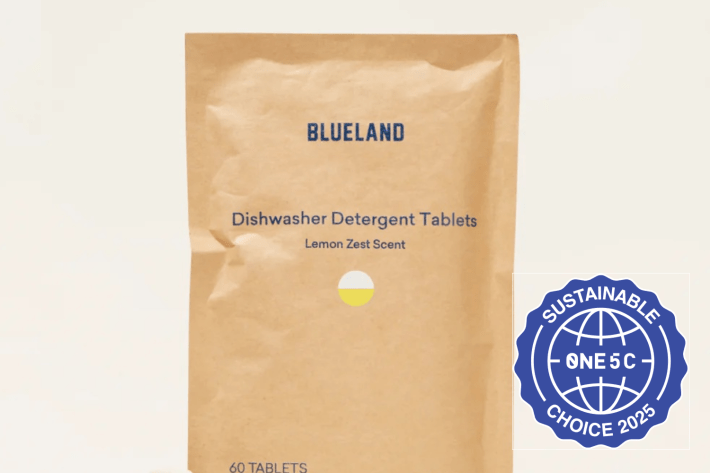
No manner of stuck-on grime or goop was a match for Blueland’s Dishwasher Detergent Tablets ($21 for 60; blueland.com). The white cubes removed red sauce, banished nut butters, lifted lipstick stains, and did away with an array of post-dinner messes. Load after load of dishware and utensils emerged sparkling and spot-free. The tablets—which tied for first in our performance tests and placed first across sustainability metrics—also neutralized odors, left no lingering residue, and kept the inside of our appliance looking fresh. As a company, Blueland takes great steps in caring for the environment. Some highlights: It’s earned a Climate Neutral certification and eliminated almost all emissions from its internal operations and energy use.
Runner-up: Branch Basics Dishwasher Tablets
Branch Basics Dishwasher Tablets ($15 for 40; branchbasics.com) were the only detergent we tested to match Blueland’s cleaning power, tying for first place in performance. Washing cycles with a Branch tablet not only squeakily cleaned our plates, utensils, and glassware but also made the inside of the dishwasher look brand-new. The tablets effectively extinguished odors. Branch ultimately took runner-up status because it placed third in our sustainability analysis, largely due to a lack of transparency in certain categories.
What sustainable dishwasher pods we tested
We pored over ingredient lists and eco-friendly certifications, analyzed ratings and product insights from both customers and published reviews, and compared price points with popular tablets. Ultimately, we chose five dishwasher tablets that are widely available for purchase online and can also be found on the shelves of most supermarkets and big-box stores. Those we tested range in price from $0.22 to $0.52 per tablet, or an average cost of $0.39 per dishwasher load.
- Blueland Plastic-Free Dishwasher Detergent Tablets
- Branch Basics Dishwasher Tablets
- Clean Cult Dishwasher Tablets
- Dropps UltraWash Plus Dishwasher Detergent
- Ecover Automatic Dishwasher Tabs
How we picked the best sustainable dishwasher tablets

Our product recommendations are based on two parallel assessment tracks: one for performance and one for sustainability. These ratings combine to land on our final winner, which represents the ideal blend of a product that’s good for the Earth and for your life. Read more about our assessment process here.
How we tested sustainable dishwasher tablets
We tested each dishwasher tablet on multiple full loads of dirty dishes, using an energy-saving cycle in a standard Maytag dishwasher freshly filled with rinse aid. We scraped the plates to avoid leaving too much food residue but did not pre-rinse. After each cycle, we evaluated the cleanliness of silverware, dishes, and glasses, checked for any lingering odors, and looked for any tablet residue. In addition to testing each eco-friendly dishwasher pod on a range of everyday meal stains, we also subjected each tablet to the following tests:
- Lipstick test: We applied multiple marks of lipstick and lip gloss (if you’re curious, MAC Cremesheen lipstick in Dare You and Tarte Maracuja Juicy Lip Balm in Hibiscus) around the rims of stemware, water and juice glasses, ceramic coffee mugs, and even a few reusable straws. Post-cycle, we inspected the drinkware to see how well the stains lifted.
- Nut butters test: We smeared Skippy Natural Creamy Peanut Butter and Trader Joe’s Creamy Almond Butter (a thick and sticky spread that’s notoriously hard to clean) on dinner plates, dessert plates, and cereal bowls and let them dry so the butter could harden. We then ran the dishwasher and checked for stains, spots, and lingering odors.
- Tomato sauce test: We drizzled about a teaspoon of Tuttorosso tomato sauce onto flat plates and bowls, let it dry completely into a stuck-on paste, ran the washer, and inspected for any stains.
How we scored sustainability
Our sustainability ratings take into account three factors: a product’s environmental impact at its production, what happens at its end-of-life, and the manufacturer’s environmental behavior. Production factors in where, how, and with what a product is made—for dishwasher tablets, it’s especially important whether there’s a plastic film—as well as how it’s transported through the supply chain. End-of-life takes into account the quality of the ingredients used, and any potential toxicity, among other factors. The final factor involves actions the company takes outside the life of a product to minimize its footprint or benefit the environment, and we award bonus points for transparency, as well. These scores are informed inferences based on available information, not full-blown life-cycle analyses.
How Blueland's tablets performed
To be honest, we didn’t harbor high hopes for eco-friendly dishwasher tablets. With plant-based ingredients and the limitations of energy-saving wash cycles, we didn’t expect them to match the cleaning power of traditional pods—especially on stubborn messes like lipstick stains or caked-on almond butter. After all, even some consumer darlings leave the occasional fork, plate, or coffee mug in need of a second scrub.
Blueland proved us wrong. While several brands did well across our tests, Blueland stood out by thoroughly removing the full buffet of messes: weeknight dinner debris, dried-on red sauce, goopy nut butters, and lipstick stains. The slim tablets also left our dishwashers clean and deodorized after each cycle. Only Branch Basics Dishwasher Tablets ($15; branchbasics.com) matched Blueland’s consistency and results.
Nearly every brand handled tomato sauce and makeup stains surprisingly well. Load after load of dishes with stuck-on red sauce came out clean, and all glassware emerged without any kiss marks or cloudy appearances. But Blueland’s scrub-a-dubbing power became clear with nut butters, which are famously tough to clean because of their thick, sticky texture. Blueland tablets removed all traces of them every time.
Other tablets weren’t as consistent. Clean Cult Dishwasher Tablets ($11 for 32; cleancult.com) cleared the lipstick and tomato sauce tests, but then left behind some unpleasantness like peanut butter specks, a filmy residue at the bottom of the washer, and a faint nutty scent. While we appreciated their light, faint scents, the tablets from Ecover Automatic Dishwasher Tabs ($18 for 45; walmart.com) and Dropps Ultrawash Plus Dishwasher Detergent ($25 for 64; dropps.com) struggled with both peanut and almond butter, leaving behind streaks on several plates. Dropps also left small white flecks of residue on glassware.
Nothing’s perfect: There’s a reason so many dishwasher tablets and pods come in individual wrappers or encased in some sort of soluble film: The sheathing helps them stay intact. Our only complaint about Blueland’s tablets is that they are very chalky and quite crumbly. (We leveled the same concern at their flaky-but-phenomenal multipurpose cleaner tablets.) There was already a good dusting of powder at the bottom of our bag—we’re guessing that as we get to the bottom of our supply, we’ll have at least a tablet or two’s worth of powder to dump into the dishwasher’s reservoir. Even so, we still got our money’s worth: we counted more tablets than the 60 noted.
Why Blueland's tablets are sustainable
Like almost every brand we tested, Blueland’s ingredients are gentle on the planet. They’re almost all naturally derived, including a mineral-based cleaner and stain remover (sodium carbonate and sodium percarbonate, respectively), enzyme blends to break down proteins and starches, and other chemical compounds that help clean and help the tablet dissolve smoothly. Its formulation also includes zero PVA, which is true of all the tabs on our list except for Dropps.
Blueland’s planet-friendly approach is what helped it stand out in numerous ways, but especially for its reductions in energy consumption. Blueland is Climate Neutral certified, meaning it tracks and reduces its own emissions and funds projects that reduce and remove greenhouse gases. It has eliminated almost all Scope 1 and Scope 2 emissions (which refers to purchased energy and direct emissions from things the company owns). They’ve managed to do this by, for example, convincing a key manufacturing partner to transition to 100% renewable energy, and switching to lower-carbon materials. And, though we don’t love carbon offsets as a means to draw down emissions, Blueland does reach its goals by buying credits that support vetted projects like renewable energy production through Crow Lakes Wind and forest conservation Rimba Raya in Indonesia.
Blueland also has loads of certifications that support its ethics to verify that its products are safe for people (EPA Safer Choice) and the environment (Cradle-to-Cradle), and are animal cruelty–free (Leaping Bunny). The company is also a certified B Corporation, which means it meets credible thresholds for its transparency, accountability, and impact on its employees, communities, and environment. Blueland is politically active too, advocating for policies that would reduce single-use plastic packaging and ban PVA.
Nothing’s perfect: Blueland’s packaging is made of compostable paper that’s free of single-use plastic, and its cardboard shipping boxes are curbside recyclable. That’s all great, but we wish the packaging itself were made of recycled materials. We’d also like Blueland to ask the Environmental Working Group to certify that its dishwasher tablets are nontoxic, as part of its cleaning product review program. The company could also do more to report on (and reduce) the water it uses in production.
The runner-up
Branch Basics was tablet-to-tablet with Blueland during all cleaning tests, tying with it for first place in performance. The dishwasher pods had no problem with nut butters, easily lifted lipstick from glasses, and rinsed red sauce stains clean. We were especially impressed by how clear the glassware looked: not a cloud nor a speck of residue in sight. And while they have no scent, our dishwasher never smelled cleaner than it did after a cycle with one in the hopper. The tablets also didn’t shed flakes like Blueland and broke down fully after all washes.
Ultimately, Branch Basics fell to third in sustainability, ranking below both Blueland and Ecover. While we love that the tablets use nontoxic ingredients, the company doesn’t report anything about CO2 emissions or reduction goals, or on water use and pollution. We also wish it would ditch plastic in its packaging.
Barbara Bellesi Zito is a freelance home and lifestyle writer, as well as a published novelist. She has written for Apartment Therapy, Reader’s Digest, Real Simple, U.S. News & World Report, and more.
Tyler Santora is a freelance science journalist, editor, and fact-checker. He has written for publications such as Undark, Scientific American, Popular Science, and more.
one5c does not earn a commission on any product purchased through our reviews.