
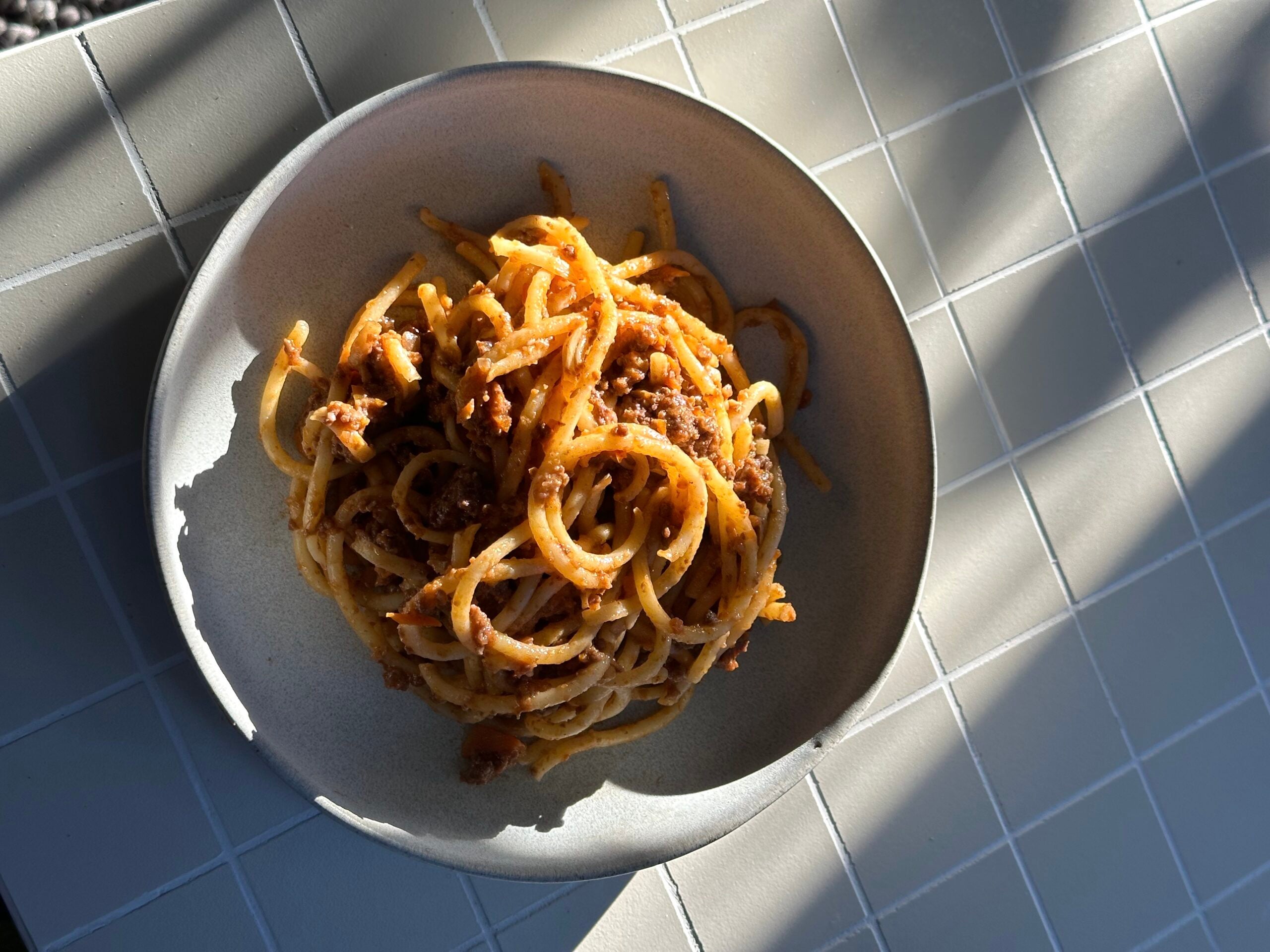
Eating venison has a ton of ecological benefits (read about them below), and it’s probably more available than you’d think—even if you don’t want to hunt. Plus, if handled properly, it’s a tasty (not gamy) swap for beef in many cool-weather favorites like chili, and in this rich, luxurious Bolognese sauce that would make any Nonna proud.
This meaty pasta sauce is usually a celebration of the cow (beef, butter, milk), but this venison version has a few sustainable swaps and tastes just as luxurious. We add a splash of red wine vinegar in with the wine to complement the rich flavor of the deer. But the real trick to any good Bolognese is time, which is great news here: It means the lean venison requires zero special attention because the slow braise keeps it moist. It’s not a quick recipe, but the majority of cook time is hands off. Plus, it lasts a week in the fridge and freezes beautifully so it’s well worth the wait.
Venison Bolognese
Yield: 4 servings
Ingredients:
- 1 medium yellow onion, peeled and quartered
- 1 medium carrot, peeled and roughly chopped
- 1 celery stalk, roughly chopped
- 8 ounces button mushrooms, roughly chopped
- 4 tablespoons olive oil (or nondairy butter)
- ¾ teaspoon kosher salt, divided
- 1 6-ounce can tomato paste
- 1 pound ground venison
- 1 ½ cups veggie or venison stock
- 1 cup red wine
- 1 tablespoon red wine vinegar
- 1 cup unflavored oat milk
- ½ nutmeg, freshly grated (or ½ teaspoon ground)
- ½ teaspoon freshly ground black pepper
- 1 pound pasta of your choice
Procedure:
- Add onion, carrot, celery, and mushrooms to the bowl of a food processor and pulse until very finely chopped (or finely chop by hand).
- Heat oil or butter in a Dutch oven or other large pot over medium. Add the vegetables and ¼ teaspoon of salt and cook gently without browning until tender, 5-10 minutes.
- Once the vegetables are soft, raise heat to medium-high and add the tomato paste. Cook, stirring often, until the paste deepens in color, 3-4 minutes. Add the ground venison and sprinkle with ½ teaspoon salt. Cook, using a wooden spoon to break up the meat, until no longer pink.
- Add the broth and bring to a simmer. Reduce the heat to medium-low and gently simmer, uncovered and stirring occasionally, until the liquid has mostly evaporated, 45 minutes to 1 hour.
- Add the wine and vinegar and repeat the process, gently simmering until the liquid has mostly evaporated, about 45 minutes.
- Add the oat milk, nutmeg, and pepper and stir. Bring back to a simmer and continue simmering until thickened to your liking, 20-30 more minutes. There should be no liquid on top of the meat, and the whole mixture should be thick and creamy.
- When you add the milk to the sauce, bring a large pot of heavily salted water to a boil and cook your pasta until al dente, according to package directions. Strain, reserving 1 cup of pasta liquid, and add to a bowl. Ladle some of the Bolognese sauce on top and toss, adding some pasta water if necessary to spread the sauce. Plate and top with a bit more sauce.
Notes and Substitutions:
- We like a wider noodle, like tagliatelle or pappardelle, with Bolognese because it feels like deconstructed lasagna. Tube shapes like rigatoni or even orecchiette are also excellent at catching and holding all the meaty bits.
Your venison questions, answered
Aren’t deer a vital, beautiful part of the ecosystem?
You probably have an emotional response to the idea of eating venison because of a little movie called Bambi. Here in the three-dimensional world, though, there are plenty of reasons why hunting and eating wild deer is beneficial—even essential—for ecosystem health. Simply put, there are just too many deer, specifically whitetails. Humans have driven out natural predators like wolves and big cats, so there’s little left to keep herd sizes in check. Too many deer are dangerous to themselves and others: Animals wandering onto roads result in north of 1 million traffic accidents and about 200 deaths a year, and the majority of those incidents are from deer.
Those hooved masses are also major environmental pests. When they find something they like to eat, they won’t stop until the land is bare, which is bad news for both existing flora and attempts at reforestation. Plus, like all ruminants, deer poot and burp methane during digestion. It’s hard to get good data on a wild population, so the estimates on just how much vary a lot: On a pound-per-pound basis, some numbers say they produce more methane than cows, while others say the opposite is true. Either way, eating wild venison reduces methane. Full stop.
Doesn’t venison taste gamy?
The flavor of any meat is determined by what that animal eats, how old it is, and how active it is. Most supermarket beef comes from farmed cattle that have a pretty sedentary lifestyle and a diet that consists mainly of corn and grains like oats and barley. If that’s what you’re used to eating, your palate is likely accustomed to some pretty bland meat.
Wild deer eat a diverse diet of herbs, grass, plants, fruit, and acorns. Some of them may nibble on corn, but it’s definitely not their main meal. Venison, as a result, can taste more grassy and herbal, similar to grass-fed beef or bison if you’ve ever tried it. People sometimes call this flavor “gamy,” but that term actually refers to an off taste that has more to do with spoiled meat or the venison fat itself, which can have a very strong taste.
In a blind taste test run by Outdoor Life, venison crushed beef by an 8-to-2 margin. Nutritionally speaking, the other red meat also beats out the go-to: It’s lower in fat (though slightly higher in cholesterol) and has more protein, vitamins B6 and B12, and omega-3 fatty acids. Plus, it’s got more iron than any other red meat.
Can I even get it if I don’t want to hunt?
Ready to get your hunting license? Maybe not, but you probably have friends who have theirs. There are nearly 16 million hunters in the U.S., which means in a population of about 331 million people, around 1 in 20 has a license. You know 20 people, right? Ask around: The average whitetail yields more than 50 pounds of meat, and you’re probably two degrees separated from a hunter who has some to spare.