
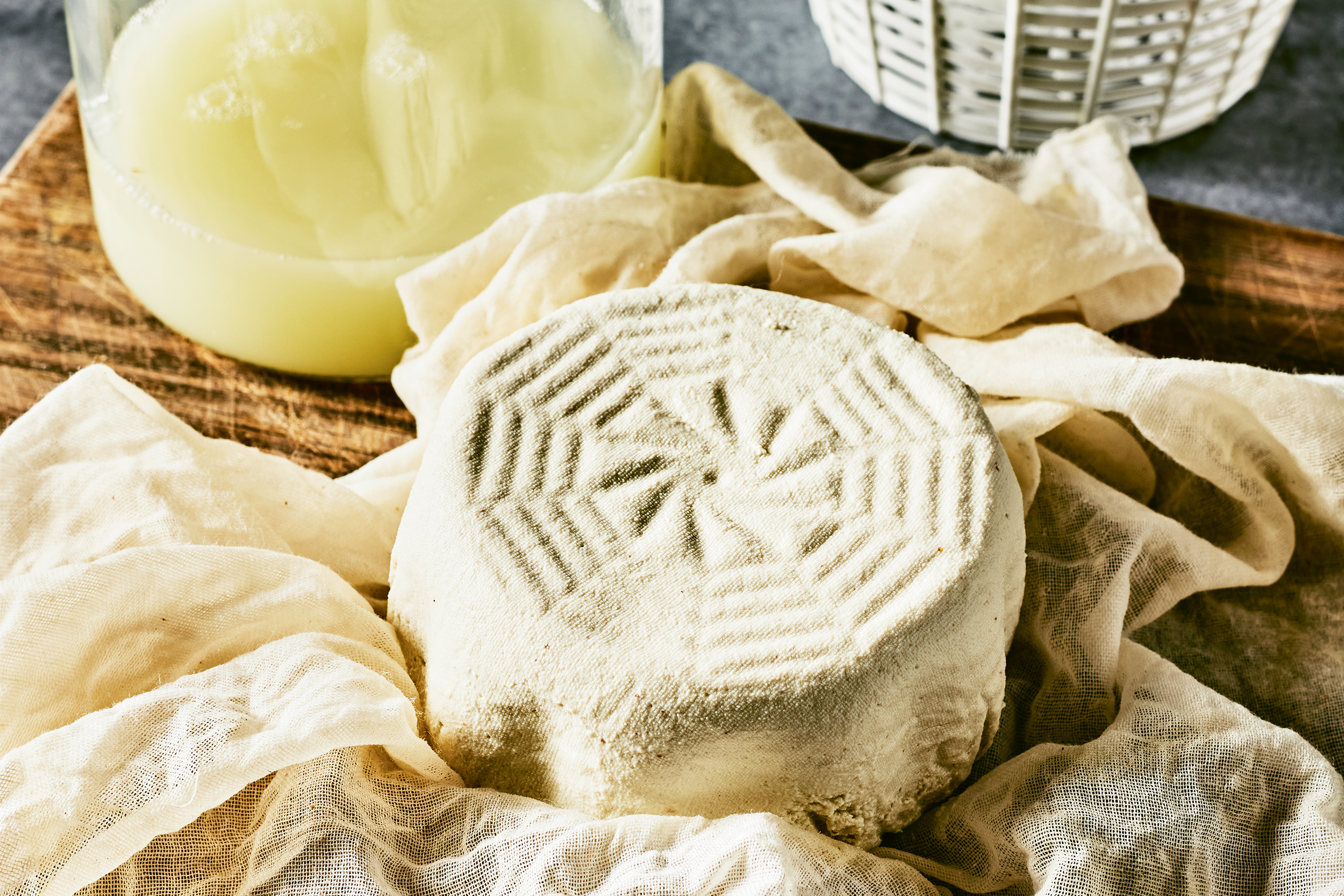
I offer two versions of ricotta here, in case allergies are an issue. They are both light, creamy, and fluffy, and can be used in a variety of dishes from lasagna to cheesecake and more. Ricotta is not fermented, so this is one of the quickest recipes to make.
Almond–Pumpkin Seed Ricotta
Yield: 12–16 ounces
Ingredients:
- 1 cup (140g) almonds (if not using a high-powered blender, soak for 8 hours in cold water, then drain and rinse)
- ½ cup (70g) pumpkin seeds
- 3 cups (710ml) water
- 1½ tablespoons lemon juice or distilled white vinegar
- ½ teaspoon fine sea salt
Procedure:
- In a blender, combine the almonds, pumpkin seeds, and water and process on high speed until smooth and creamy. Pour the mixture into a nut milk bag and squeeze to extract as much milk as possible into a saucepan.
- Set the saucepan over medium heat and heat the milk to about 200 degrees F, stirring gently a few times; you will see some mild curdling. Add the lemon juice and salt, stir, and let it sit for about 2 hours undisturbed, until curdled further.
- Line a sieve with cheesecloth and set over a bowl. Pour the mixture through the sieve and let it drain until it resembles ricotta, 1to 2 hours. Use immediately or store in a covered container in the refrigerator for up to 2 weeks.
Watermelon Seed–Cashew Ricotta
Watermelon seed milk is really, well, milky. And used as the base for ricotta, it creates an incredibly milky flavor and delicate texture with a hint of grassiness, reminiscent of its dairy counterpart. Note that the addition of cashews is an imperative, not an option.
Yield: 1 1/2 pounds
Ingredients:
- 1 cup (140g) watermelon seed kernels
- ½ cup (70g) cashews
- 4 cups (950ml) water
- ½ teaspoon fine sea salt
Procedure:
- In a blender, combine the watermelon seeds, cashews, and water and
- process until a smooth milk is achieved. Pour this through a nut milk bag and squeeze to strain the milk into a pot. There will be only a small amount of pulp.
- Heat the milk over medium-low heat, occasionally scraping the bottom and sides with a silicone spatula. As it heats up, tiny curds will form and solidify, with the boiling bubbles formed from the “whey.” When almost the whole mass has formed curds, stir in the salt and then pour it through a sieve or ricotta mold set over a bowl. Let the mixture drain for 30 minutes to 1 hour, or longer in the refrigerator until it is as firm as you like.
- Transfer to a storage container and store in the refrigerator for up to 2 weeks.
Excepted with permission from The Vegan Creamery Copyright © 2025 by Miyoko Schinner. Photography copyright © 2025 by Eva Kolenko. Published by Ten Speed Press, an imprint of Crown Publishing Group.