
Of all autumnal fruits, the pawpaw is unique in plenty of ways—including for its decidedly unseasonal tropical flavor—but climate-minded cooks and bakers have had their eyes on it for a while. The largest native fruit in the U.S., pawpaws are a hot topic in climate cuisine because of their potential resilience to rapidly shifting conditions.
You may have tried them in a cocktail or snuck a spoonful at one of the seasonal festivals devoted to the folkloric fruit. But this year we decided to throw a small festival of our own. Everyone say “hey” to Caroline Saunders, the baker behind Pale Blue Tart, who’s here with us today to crack into what makes pawpaws the “it” fruit of the future—and, of course, to collaborate on a delectable treat that puts ’em center stage.
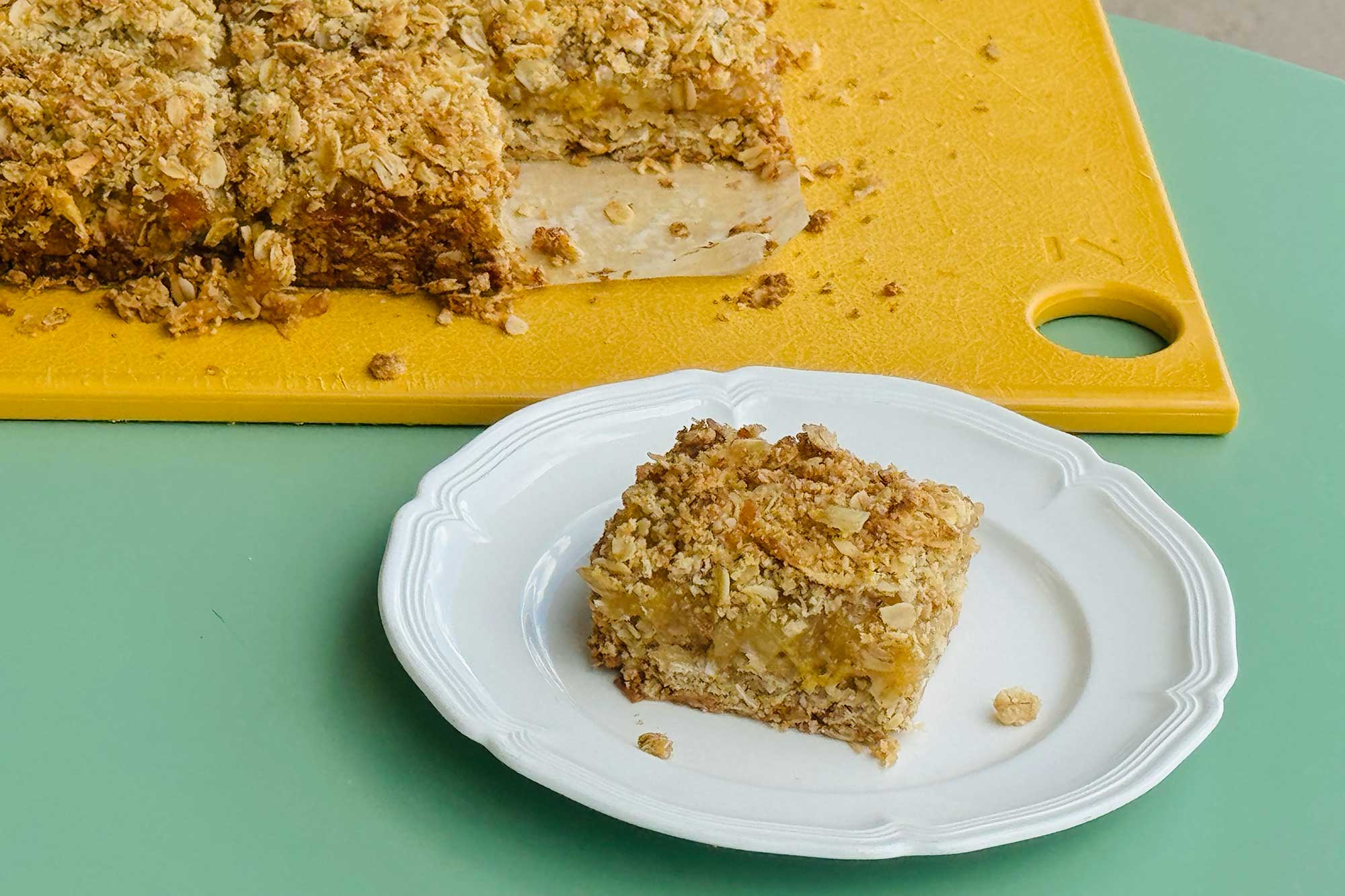
The best way to enjoy a pawpaw is simply to cut it open and scoop out the ripe flesh with a spoon. You can also add it to smoothies or purée it to use in baking, the same way you would use pumpkin. Rather than blitz it into oblivion, we wanted to make a dish that lets the unique flavor of pawpaw sing. To do that, we’re sandwiching a subtly spiced pawpaw jam into some nutty coconut crumble bars that lean into the pawpaws’ tropical notes.
To preserve the fruits’ flowery flavor profile, which has a tendency to fade away if you overcook it, we’re going with a quick jam that simmers just long enough for the fruit and sugar to gel. Even if you can’t find pawpaws, the bars are still a treat, though—and you can keep it simple too: Sub in a store-bought jam that hits the tropical vibes, like mango or orange marmalade.
Pawpaw curious? Find out more about the fruit below the recipe.
Pawpaw Coconut Crumble Bars
Yield: 9 bars
Ingredients:
- Pawpaw jam
- 2 cups pawpaw pulp, mashed
- ½ cup granulated sugar
- ¼ cup packed light brown sugar
- ¼ cup lemon juice
- ⅛ teaspoon nutmeg
- Small pinch salt
- Crumble bars
- ½ cup coconut oil, melted
- ½ cup smooth nut butter or tahini
- 3 tablespoons maple syrup
- 1½ cups rolled oats
- 1 cup oat flour*
- 1 cup almond flour*
- ½ cup sliced almonds (or any chopped nut you like)
- ½ cup shredded, unsweetened coconut
- ¼ cup lightly packed brown sugar
- 1 teaspoon baking powder
- ½ teaspoon kosher salt
Procedure:
- Preheat the oven to 350 degrees F. Grease and line an 8-by-8-inch baking dish with parchment or a silicone baking mat.
- Make the jam.
- Cut the pawpaws in half, scoop out the flesh, and remove the seeds. Mash the resulting pulp with a fork until it’s fairly even in consistency.
- Combine pulp and all the remaining jam ingredients in a medium saucepan and cook over medium heat until the mixture reaches a strong simmer.
- Reduce the heat to medium-low (just high enough to keep it at a gentle simmer) and cook, stirring frequently, until some of the water has reduced and the mixture has just begun to gel, about 7–10 minutes. It should yield 2 slightly rounded cups. Allow the jam to cool to room temperature.
- Assemble the bars.
- In a large bowl, mix the coconut oil, nut butter, and maple syrup until smooth. Add the remaining ingredients, minus the jam, and mix until combined.
- Press two-thirds of the dough mixture into the bottom of the pan so it’s tightly packed. Spread the jam on top of that layer. Sprinkle the rest of the crumble mixture over the top.
- Bake for 40 to 45 minutes until golden. Let cool completely before cutting into squares.
Notes and Substitutions:
- Store any leftover jam in the fridge and use within two weeks.
- If you don’t have oat or almond flour, you can make either one. To make oat flour, add an equal amount of oats to a blender or food processor and blend until you have a floury meal. To make almond flour, do the same thing, but be careful not to overprocess or you’ll end up with nut butter!
- If you’re swapping out the pawpaw jam, opt for a store-bought variety with a more subtle flavor, like mango or orange. Anything big and bold, like apricot, can overwhelm the coconut flavor in the bars.
Meet the pawpaw
Like Juicy Fruit gum, the tropical flavors of pawpaw are hard to pin down. When ripe, the custardlike flesh tastes like a cross between mango, banana, and pineapple (similar to ripe jackfruit). While pawpaws pack big island flavor, the fruit actually grows wild in 26 states along the eastern and southern U.S., with Pennsylvania being a prime foraging ground. The greenish-yellow fruits have soft yellow flesh with fat lima bean-sized seeds.
Indigenous tribes in the Appalachian region, including the Cherokee, Shawnee, and Lenape people, have enjoyed the fruit for centuries. They eat it fresh, mashed into cakes, or dried on long hunting trips. Tribes also used the fibrous bark of the pawpaw tree to make rope, string, and baskets. So if the fruit has been around so long (even as a favorite dessert of George Washington), why haven’t most of us tried it?
For a prized American fruit, pawpaw is hard to source. In a food system built around vittles that can be machine-harvested, survive bumpy transit, and last for ages in the fridge, the pawpaw is an underdog. The delicate fruits are ripe for just a handful of weeks between late August and early October, bruise easily, and typically last only a few days, once picked.
But where they fall short on supply-chain logic, they’re kind of an environmental no-brainer. Like other native plants, pawpaw trees support local ecosystems. They’re the host plant for the zebra swallowtail butterfly, which flits among the tree’s broad, green leaves in the spring to lay its eggs. The trees—whose ambrosial smell will help you identify them if you hike past when the fruits are ripe—can also help protect and restore watersheds, because their roots prevent farm runoff and hold streambanks in place. They’re also unruffled by most pests, which means they rarely (if ever) need pesticides. In fact, pawpaws require so little management that they can be an attractive addition on small farms.
Perhaps the biggest reason we’re on Team Pawpaw is that, unlike so many mass-produced cultivars, they’re well poised to keep feeding us in a climate-changed future. Their native status and abundant wild varieties act like an insurance policy against climate chaos. “Since there are native stands of [pawpaws] all over the country, we have so much variation and lots of great fruit quality,” Adam D’Angelo, the director of research at Project Pawpaw, told The Guardian. “We are able to draw upon that to make sure that we still have crops that can perform in varying conditions.” Subfreezing temperatures? Flooding? The pawpaw can handle it.
The tropical-tasting fruit isn’t completely climate-immune, though—nothing is. This year, for instance, drought and shifting weather patterns affected some crops in Ohio and Kentucky, leading to earlier harvests and smaller, more bitter-tasting fruit. Still, farmers and researchers alike are optimistic that the hardy pawpaw can weather whatever human-caused climate change may bring, and make American fruit culture a whole lot tastier in the process.
So how can you get your hands on this magical, mystical fruit? See if there’s a pawpaw festival near you, or you can find a forager or farm to order some from online (we got our bounty from Forager.com). If you’re feeling ambitious, pawpaw trees are relatively easy to grow since they are pretty resistant to insects and disease. Since the trees are native, they are well adapted to the soil they are found in.