
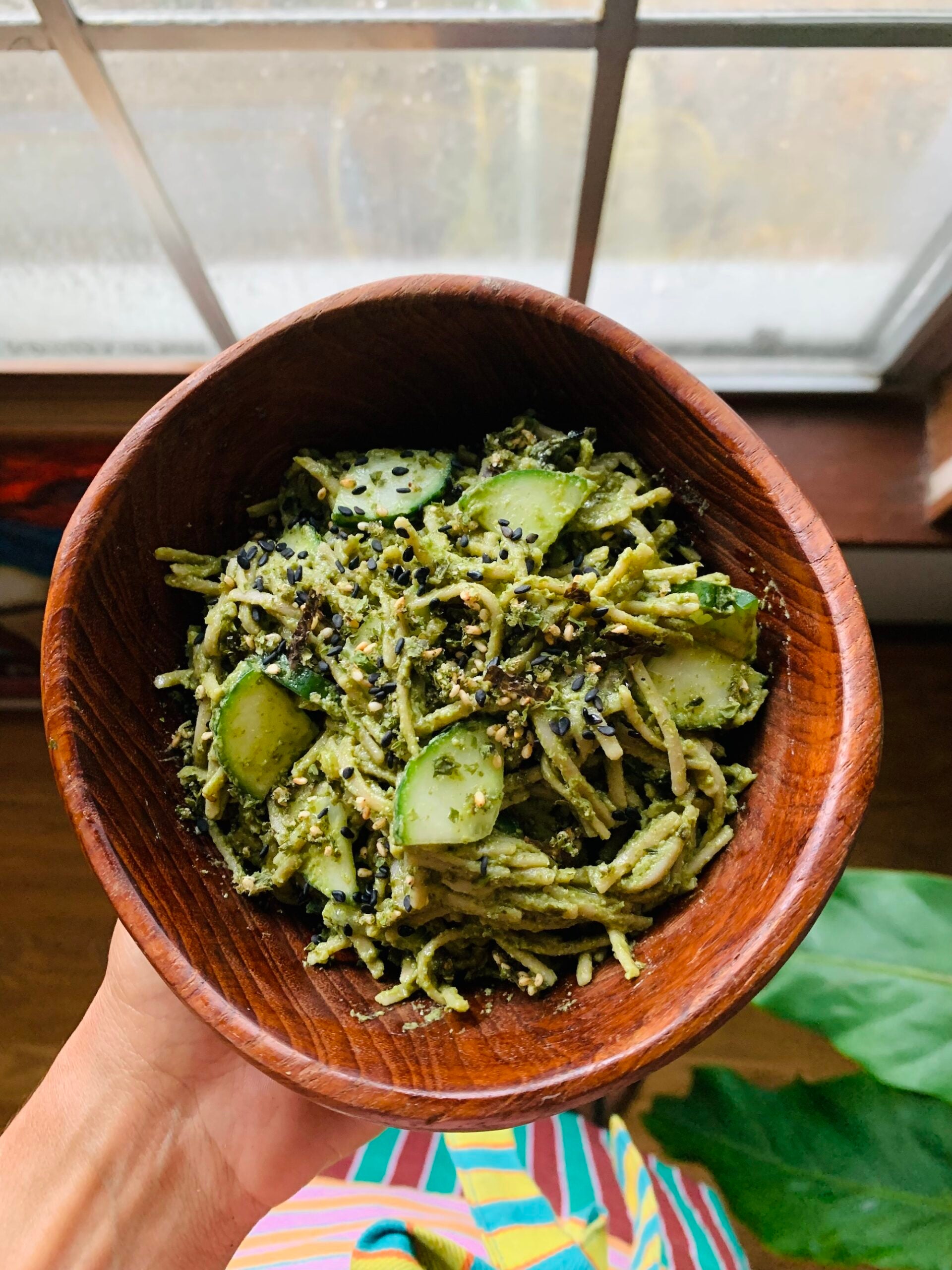
Seaweed may not have as many loyal, adoring fans as kale, but you should consider drafting it into your salad rotation. Though it makes plenty of cameos in Western cuisine, a lot of folks may not realize that they already kinda love the taste of it. Seaweed inspired the invention of MSG. That’s because it’s high in glutamates—the stuff that delivers big umami energy—and so it can add depth to all kinds of recipes.
In this cold noodle dish, savory shots from an emerald green seaweed called wakame kick up a delicious pesto that coats buckwheat soba noodles and crunchy cucumbers. This mix tastes great both at room temperature and chilled, and the leftovers will be even more flavorful. That’s right: You’re looking at your new favorite monochromatic “pasta salad” for everything from beach picnics to BBQs—and the perfect entry-level plate to flex your new seaweed cooking skills.
Once you’ve tried it, keep scrolling for our guide to the varieties of seaweed you’ll encounter in the supermarket, including tips on the best ways to showcase the versatile staple.
Cucumber Soba Noodle Salad with Seaweed Pesto
Yield: 4 servings
Ingredients
- ½ cup dried wakame, lightly packed
- 8 ounces buckwheat soba noodles
- ½ cup unsalted cashews, toasted
- ⅓ cup nutritional yeast
- 2 garlic cloves, finely chopped or grated
- 4 cups fresh basil, lightly packed (about 4 ounces)
- 2 tablespoons lemon juice (about 1 lemon)
- ¾ cup extra-virgin olive oil
- ½ teaspoon Kosher salt, plus more to taste
- ½ large English cucumber, quartered lengthwise and thinly sliced
- Toasted sesame seeds, for topping
Procedure
- Hydrate the wakame. In a small bowl, combine wakame with 1 cup of boiling water and set aside for 10 minutes to soften. Drain, reserving the soaking liquid.
- Cook the noodles. Meanwhile, cook the noodles in a large pot of boiling salted water until al dente, about 8 minutes. Drain and rinse the noodles under cold, running water to eliminate excess starchiness (and prevent a gummy mess). Set aside.
- Make the pesto. Add the wakame, cashews, nutritional yeast, and garlic to a food processor and pulse until finely ground. Add the basil and lemon juice. With the motor running, drizzle in the olive oil in a slow, steady stream until the pesto is smooth. Season to taste, adding ½ teaspoon of salt at a time; seaweed is salty, so be very careful not to add too much too early.
- Assemble. Add the cooked soba and cucumbers to a large bowl with about half the pesto and toss to combine until the noodles are coated with sauce. If the pesto is clumping up, add a bit of the reserved wakame soaking liquid to help distribute it. Top with sesame seeds.
Notes and Substitutions
- The pesto recipe makes about 1 ½ cups, so there will be plenty left over after you dress the noodles. Save it for sandwiches, drizzling on roasted veggies, or stirring into scrambled eggs or tofu.
- Swap pistachios for cashews to slightly trim the total fat in the pesto.
- If you eat fish, consider garnishing with some furikake (a condiment of seaweed and fish flakes).
- Sub ramen noodles, rice noodles, or spaghetti for the soba.
- Seaweed hates moisture and thrives in cool, dark places. Store any extra wakame in an airtight container, where it will last up to a month. For longer storage, you can keep most varieties in the fridge or freezer for up to 6 months.
Your seaweed shopping cheat sheet
Just like terrestrial veggies, certain varieties of seaweed lend themselves to different uses in the kitchen. Culinary seaweed is dried immediately after harvesting for preservation purposes. In this crispy form, it’s great as seasoning or for flavoring stocks. But for some types, a quick rehydration in warm water or broth reawakens the green as a veg in its own right. Here are some of the most common types and what we like to do with them.
Nori. This gateway seaweed comes in sheets, which makes it great for making wraps. You’ve seen it in sushi, but it’s a perfect crunchy snack when toasted. Crumble it up or throw it in a spice grinder for a tasty topper for rice and scrambles—or make umami butter.
Kombu. Also known as kelp, this variety is thick and sturdy. Large strips are commonly used to enhance soups, stews, and dashi, the broth at the core of Japanese cooking. Add a strip to a pot of beans for a hit of salinity—and to help tenderize the beans. Save the strips after they’ve worked their brothy magic and slice them up and mix into rice or noodles.
Wakame. A mild and slightly sweet plant, wakame is perfect for adding to any soup (you’ve probably seen it in miso with your Japanese takeout). Once rehydrated, it becomes silky like a noodle. It also makes a delicious seaweed salad on its own, or added to dishes like the cucumber soba salad above for some textural contrast.
Arame. This seaweed is a stir-fry favorite thanks to its squiggly strands, which resemble black angel hair pasta. Rehydrate it in hot water for 5 minutes, then throw it in the pan with whatever veggies you’re frying up.
Dulse. This red, leafy algae has a chewy, briny flavor when it’s raw, but toast it up in a skillet and you’ve got Bacon of the Sea. Once fried, dulse gets crackly like a kale chip, and its flavor becomes smokier—perfect for eggs, avocado toast, carbonara, chowder, or as the star of a “DLT” sammie.
Hijiki. This sea plant looks like tiny black twigs when dried, but plumps up big time when rehydrated, making it a perfect candidate for stir-frys and seaweed salads.