

We’re typically Team Egg around here, because, as far as emissions are concerned, they’re one of the best protein sources going. But we totally get that not everyone is pro-huevo—be that for reasons dietary, ethical, or, lately, financial.
So we’re exploring the best egg stand-ins. While there’s no swap for a crispy-edged fried egg or a jammy yolk, when eggs are an ingredient in a dish, you have options—many of which might already be in your pantry or fridge, like chia seeds, a can of chickpeas, or a block of tofu.
We're sorry to say this, but there’s no one-and-done swap for every recipe. Eggs are a source of moisture, fat, and protein, and depending on what you’re making, you need to focus on replicating different aspects of this trifecta. Some bakes need to lean on eggs for binding, while others also rely on them for lift. Some need proteins to coagulate in the oven to add structure, while others lean on eggs for fat to act as an emulsifier and enable smooth mixes. It can feel like a lot to keep track of, which is why we've rounded up our favorite tried-and-true substitutions.
In dense baked goods

What to use: For baked goods like brownies, cookies, banana bread, and bran muffins, you need eggs to bind the batter but don’t need them as much for lift. There are two good options here. You can use either flax or chia seeds to create a gelatinous mixture that holds ingredients together and adds a little fat. Combine 1 tablespoon of ground seeds with 3 tablespoons of water and let sit for 5 to 10 minutes to thicken before you add it to the recipe. Mashed banana, pumpkin/sweet potato purée, and applesauce can also provide structure to quick breads, brownies, muffins, and yeasted rolls—plus some flavor. Substitute ¼ cup of any of these purées for 1 egg. In either instance, you won’t get the same rise as you would with eggs, unless the recipe calls for other leaveners like yeast.
What to try: Double chocolate cookies, banana bread, brownies, pumpkin dinner rolls, carrot cake
In light and fluffy baked goods
What to use: Fluffier cakes and muffins rely on eggs partly as leavening agents, so this is one instance where I recommend a premade powdered egg substitute like this one from Bob’s Red Mill. Typically made from potato and tapioca starch and rising agents, these powders help with binding and rise and work best in recipes that call for 1 to 3 eggs, as they don’t provide much fat or moisture. Use 1 tablespoon per egg or follow the instructions on the bag. Carbonated water (or kombucha) can also jump in for eggs in fry batters, or as a means to light and fluffy bakes. The carbon dioxide bubbles create tiny air pockets, leading to a lighter texture. Just add ¼ cup per egg to your wet ingredients.
What to try: Scones, cupcakes, kombucha muffins, air-fryer fritto misto
In pancakes and waffles
What to use: These mainstay breakfast preparations don’t need a lot of rise but rather rely on eggs mostly for moisture, which means you’ve got plenty of options. Applesauce, mashed banana, or pumpkin will add flavor. Flax or chia are great in whole grain pancakes and waffles or ones with mix-ins like oats and nuts, since they also add a bit of texture. For a more neutral sub with a bit more lift, try the powdered egg replacer.
What to try: Banana pancakes, whole grain pancakes, pumpkin waffles
In meringues and mayo

What to use: When egg whites are whipped, their proteins start to unfold, trapping air bubbles in their web. This creates a light and airy foam that brings lift and lightness to meringues, mousses, and more. The viscous liquid from a can of chickpeas, aka aquafaba, can be whipped in a similar way to make meringues. Aquafaba’s mix of protein and carbs also helps it act as an emulsifier, which makes it an ideal base for making mayonnaise or mayo-based dressings. It also works well in brownies and pancakes. For 1 whole egg, use ¼ cup aquafaba; and for 1 egg white, use 2 tablespoons.
What to try: Aquafaba ranch or blue cheese dressing, meringues, chocolate mousse
In scrambles and omelets
What to use: Due to its high protein content, chickpea flour, when mixed with water, is an excellent binder that can stand in for eggs in batters and dishes like scrambles and omelets. For 1 egg, whisk 3 tablespoons of chickpea flour and 3 tablespoons of water or nondairy milk; this will create a thick paste that’ll cook up like scrambled eggs in the pan. Tofu scrambles are also a go-to here, but you can also use tempeh if you steam or boil it first to soften it and nix some of the signature bitterness. After that, you’re good to crumble it up into your skillet with veggies, spices, and other mix-ins.
What to try: Chickpea flour scramble or omelet, tofu scramble, scrambled tempeh
In baked egg dishes
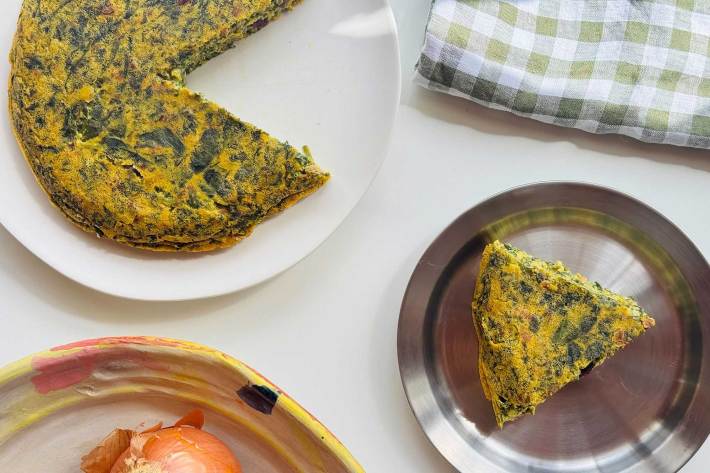
What to use: Custardy silken tofu, when blended, is perfect for frittatas and quiches because its smooth, creamy texture mimics the binding and moistening properties of eggs. Just blitz it up with spices and pour it into your baking dish. Some other helpful ingredients can include cornstarch (for thickening) and nutritional yeast (for umami and color).
What to try: Any frittata or quiche is a perfect vehicle to take this swap for a spin, but we're particularly partial to kuku sabzi, a Persian frittata filled to the brim with herbs like mint, dill, and parsley, and studded with walnuts and barberries. The ratio of greens to egg leans heavily toward the greens, so it’s a good recipe to use an egg swap.