
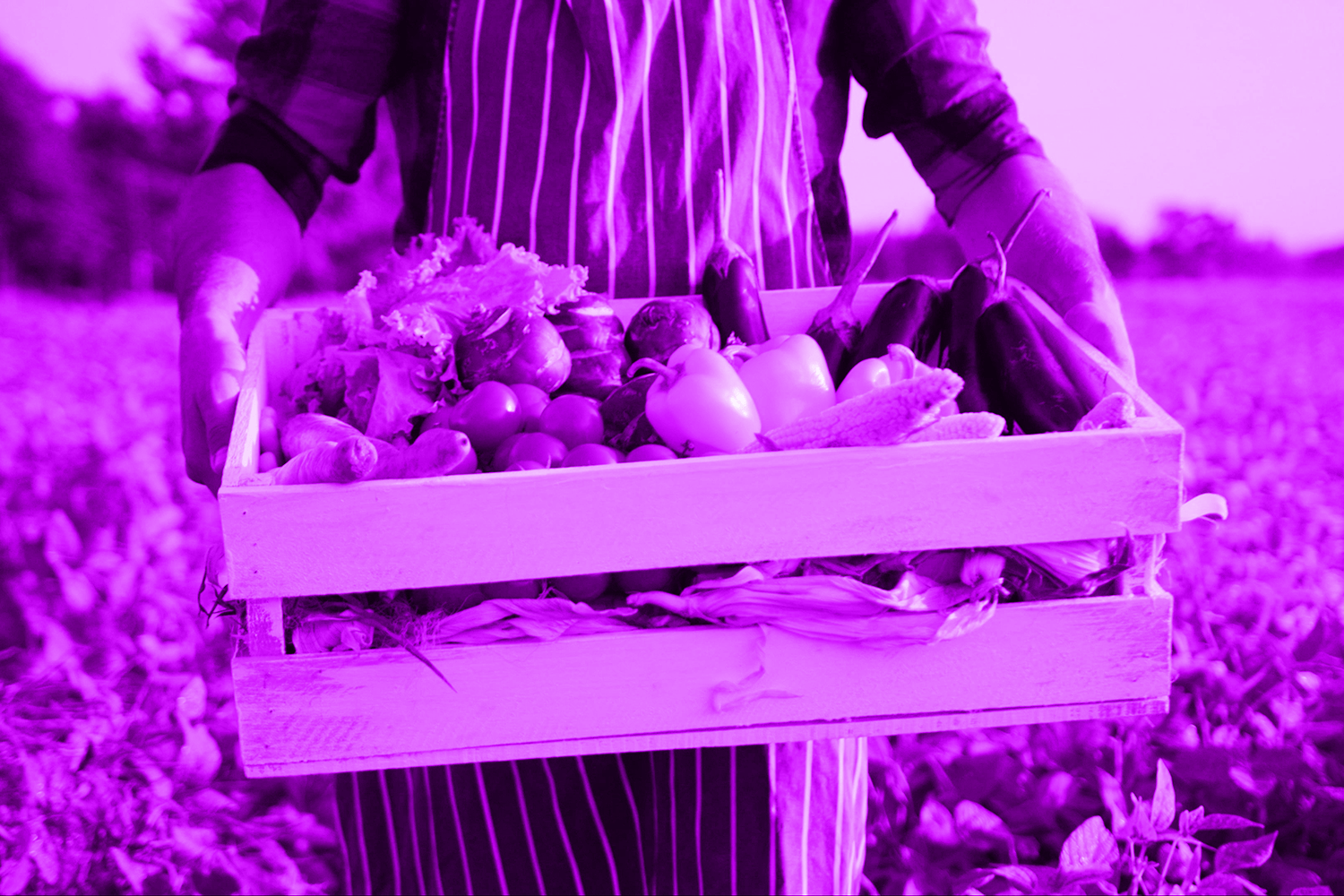
I've been wondering: When buying from the farmer's market isn't an option, which choice does the least damage: buying plastic-covered organic produce or conventional produce free of plastic? —Acacia
This is a classic climate conundrum. While there's no cut-and-dry answer, the better option from an emissions point-of-view is usually buying conventional produce that’s free of plastic. There are a couple things at play. First, naturally, is avoiding plastic at the grocery store. Packaging accounts for about 40% of all plastic waste. Around 42% of the food sector’s emissions trace back to processing and packaging—because, lest we forget, the vast majority of plastics are derived from fossil fuels—compared to about 20% from chemical inputs like fertilizers.
Those emissions are only part of the story, though, which brings us to the second reason for our recommendation: Some organic produce can have a bigger footprint than its conventional counterparts. Methods like crop rotation, cover crops, and using manure as fertilizer and pheromone traps for pest control can require more land to get the same yields—and farmland often comes at the expense of carbon-sequestering forest.
According to analysis in the journal Environmental Research Letters, an organic outfit can take up anywhere from 25% to 110% more acreage than a comparable operation to produce the same amount of fruit or veg. That could add up quickly: If organic farming were to scale to the point that it could feed an entire small country, one study found that it would result in a 56% bump in that nation’s associated planet-warming emissions.
We don’t say any of this to discount the benefits of organic farming, because the lack of chemical pesticides is good news for ecosystems and wildlife. Experts point out that organic and conventional farmers can adapt the best parts of one another’s methods toward common goals—though that’s a work in progress. But, for now, if your reason for opting for organic centers around the environmental friendliness of your diet, the single most impactful thing you can do is eat less meat.