

U.S. consumers are the biggest wasters of food in the country. American households throw away around one-third of the food they purchase. While fighting the climate crisis needs a multi-front approach—pushing for stricter emissions standards, holding fossil fuel companies accountable, and boosting conservation efforts—lowering the amount of food that goes to waste is something every person can do every day.
Decreasing the amount of food wasted in U.S. homes each year starts with shopping smart. Here are our best tips for making the most out of your grocery trip—for your household, and for the planet.
How to reduce food waste while shopping
Creating less food waste in your home starts with reducing the amount of grub you bring into the household to begin with. A little planning can help ensure you only buy what you’re sure to use up before it goes bad and lands in the bin.
Make an eating plan
Even taking 15 minutes to plan for the week is better than no plan at all, says Alison Mountford, a chef who runs the website and meal planning service Ends+Stems. Sketch out what you’ll have for breakfasts, lunches, dinners, and snacks. Things to consider when sketching out a plan:
Use what you have
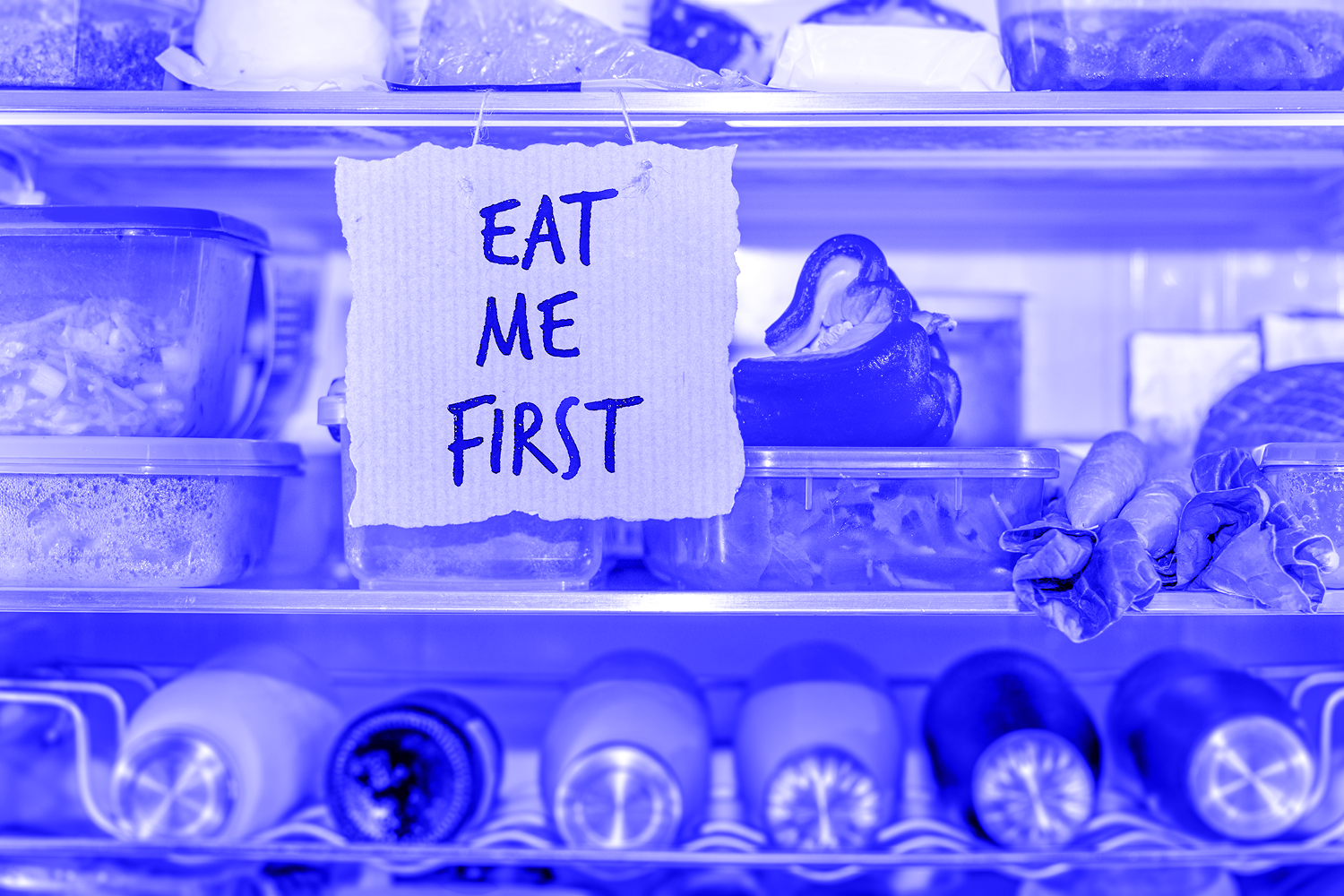
Try to plan around any perishable items you have before going back to the store for more. Some clever storage ideas to reduce food waste can make sure those items are front of mind: Have a “first in, first out” system so that the older food gets eaten before it goes bad. Also consider making a “eat me first” container or zone.
If you’re not sure what to make, Stacy Savage, a zero waste specialist and the founder of consulting firm Zero Waste Strategies, advises trying an app like Super Cook. Users can list what they have at hand, and they’ll get recipe ideas. Plug in eggs, frozen carrots with peas, and leftover rice, and the tool will suggest dishes like eggs over rice or delicious rice porridge. “It’ll kind of reverse engineer the dinner making process,” she explains. “You can figure out what you can make with the stuff that you already have on hand before it spoils.”
Learning about substitutions can also help you use up what’s languishing at home. Different crunchy veggies, for example, can be swapped out for each other. Think cauliflower for broccoli. Or swap different root veggies for each other, like different forms of roots and potatoes as the main starch.
Keep a waste inventory
Keep a running list of the items you regularly wind up tossing due to spoilage. If an item is a perennial loser, avoid it unless you have an immediate plan to use it. “We tend to buy things out of habit or emotion or because we don't know what else to do,” says Mountford.
By-the-aisle tips to avoid food waste
Different types of food at the supermarket have vastly different rates of spoilage, so knowing where to stock up—and where to buy the bare minimum—is key.
Try a refill store
Food comes in wrappings and containers that are single use and discarded after we bring groceries home. If your food comes in glass containers and jars, those can be reused to store portions of food in the fridge. If you buy certain items in bulk, try to find a no-packaging store and bring your own container or bag pack up your goodies. Google “zero-waste grocery store near me” or “refill store near me,” to find a location, or consult this database. Consider filling a huge jug of olive oil that you use frequently for food. Have a large tupperware? Fill it with lentils or jasmine rice.
Remember: The sell-by date is a suggestion
A lot of food can be consumed after the “sell-by date” on the packaging. “The sell-by date is the manufacturer's date of peak freshness for that product. It's not the expiration date,” says Savage. “So many times people will see that date and they'll be like, ‘well we can't eat this. This is completely bad.’ And that's not what that [date] indicates.” Other than infant formula, the dates on the packaging are not regulated by the U.S. Food and Drug Administration. Read more about how to parse food dates here.
Here are a few ways to tell if food is good past those dates:
How else can you reduce food waste at home?
Cooking tips to reduce food waste
The key to cooking with less food waste is eating as many parts of your veggies and fruits as possible, and really committing to using what you buy. Many vegetable stamps are perfectly edible if cooked correctly. For example, some households throw out parts of broccoli stems, but bake them alongside other crunchy greens and season with garlic for a simple but tasty side. It’s also good to consider focusing meals around nonperishable items, like dried beans, flour, rice and other goods that keep for a long time.
Storage tips to reduce food waste
Part of avoiding having to throw food in the trash is to ensure that it’s put away carefully after use. Get sturdy bag clips to ensure that opened snacks like chips or cookies are well sealed after you take out a portion. Freezing is also another option for preserving fresh foods that would otherwise go bad—say corn and green beans.
Composting to reduce food waste
Even the savviest low-waste kitchen will end up with inedible scraps like eggshells and coffee grounds. Starting a home compost pile—or finding a community program or neighbor to join forces with—can turn those organics into “black gold” to help future food thrive.
Portions of this story were adapted from Cool Beans, a newsletter from one5c focused on sustainable eating. Additional reporting credit: Liza Schoenfein.
Footnotes
- ReFed Insights Engine (2023), ReFED, Nov. 2023Return to content at reference 1↩