
Nondairy butters have come a long way in the last few decades. While the vegetable and seed oil varieties are still around, you can also get versions made from things like cultured nuts, coconut cream, and even beans.
Can any of these not-butters deliver a delicious pie crust (our fave way to bake butter) and taste great on toast (the objectively best way to eat butter)? I put four of the most popular ones to the test to find out. Then I used the winner to make a quintessential apple dessert that’s easier than, uh, pie.
The test: The plant-based butter-off
Most nondairy butters are perfectly good for slathering on toast, but for bakers trying to cut out dairy (and its outsized environmental impact compared with plant-based alternatives), alt-butter needs to pull double duty.
We’re talking crust. That melty, crunchy pastry presents what may be the ultimate test, because delivering on crust is complex business: To create flaky layers, pea-sized pieces of fat inside the dough need to hold together and then release steam in the oven. Shortening is a popular option for that job, sure, but who wants to smear Crisco on toast? Overall, an un-butter’s gotta nail four things:
- Texture. A good sub has to freeze solid, break apart easily into cubes or chunks, and be smooth and spreadable at room temperature.
- Taste. Does it have a real buttery flavor, or are there any artificial or chemical notes?
- Bake-ability. This is a measure of how the pastry acts both raw and baked. Does the crust hold together well when shaping and baking, and does it brown evenly?
- Appearance. How much does the color and consistency resemble real butter?
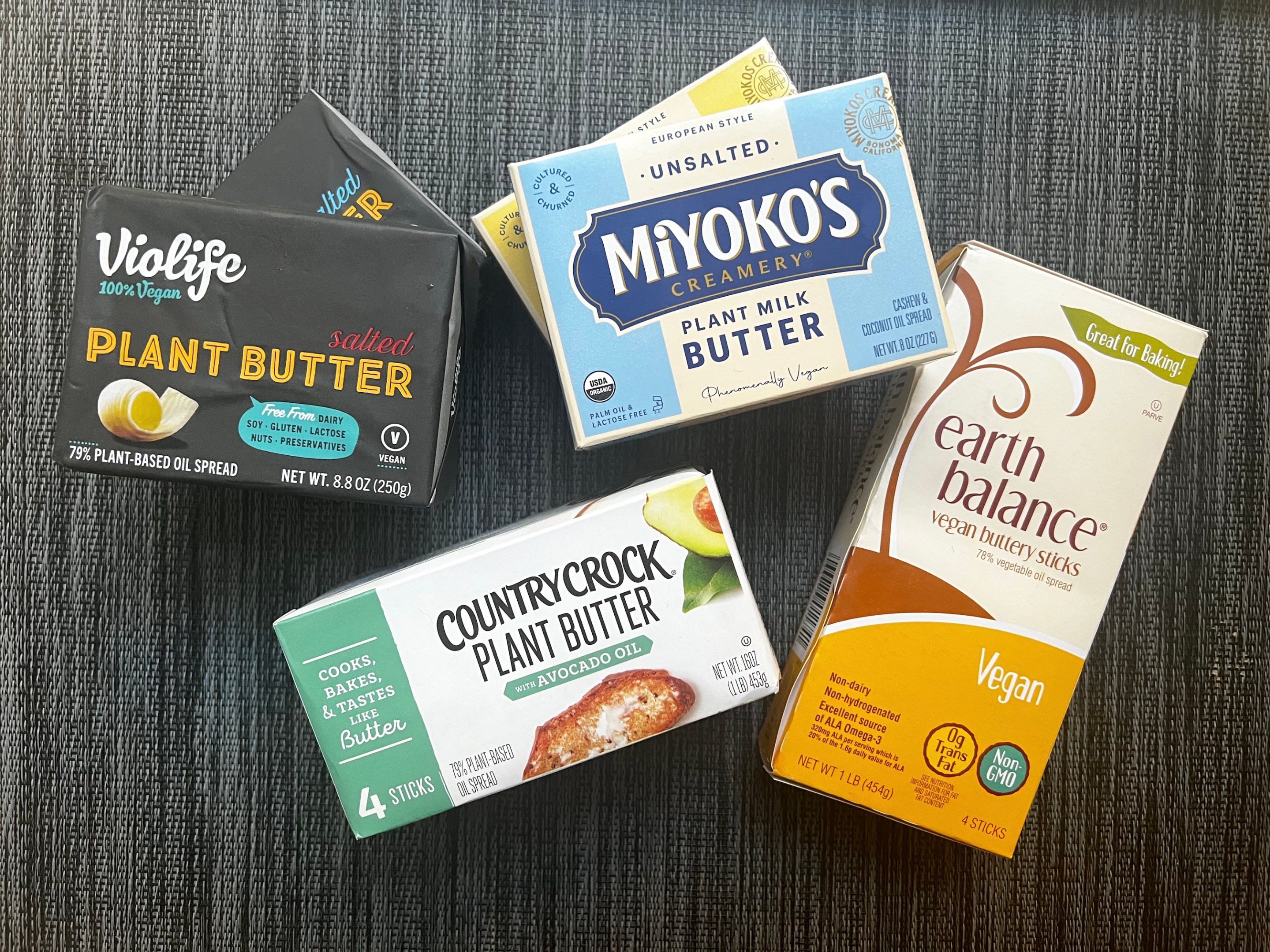
For testing, we chose four widely available supermarket brands that come in blocks or sticks, tried them all on toast, and then made our favorite back-pocket pie crust (see the recipe above) with each one. We ranked them on a scale of 0-5 🧈s, with five sticks being a spot-on—and sustainable—stand-in for the real deal. Let’s get into it.
Country Crock Plant Butter with Avocado Oil
A mainstay in the “buttery spread” game, Country Crock makes sticks in a few flavors based on the oil used: avocado, almond, and olive. The avocado oil ones have the most neutral flavor (and are the ones we see in the store most often) so we went with those for the test. The sticks come four to a one-pound box and are made with a blend of plant oils, including palm oil—an ingredient that’s drawn a lot of scrutiny as a driver of deforestation.
Texture. This was the most spreadable faux butter of them all and softened the most quickly out of the fridge, so we had to work quickly when handling it and the dough.
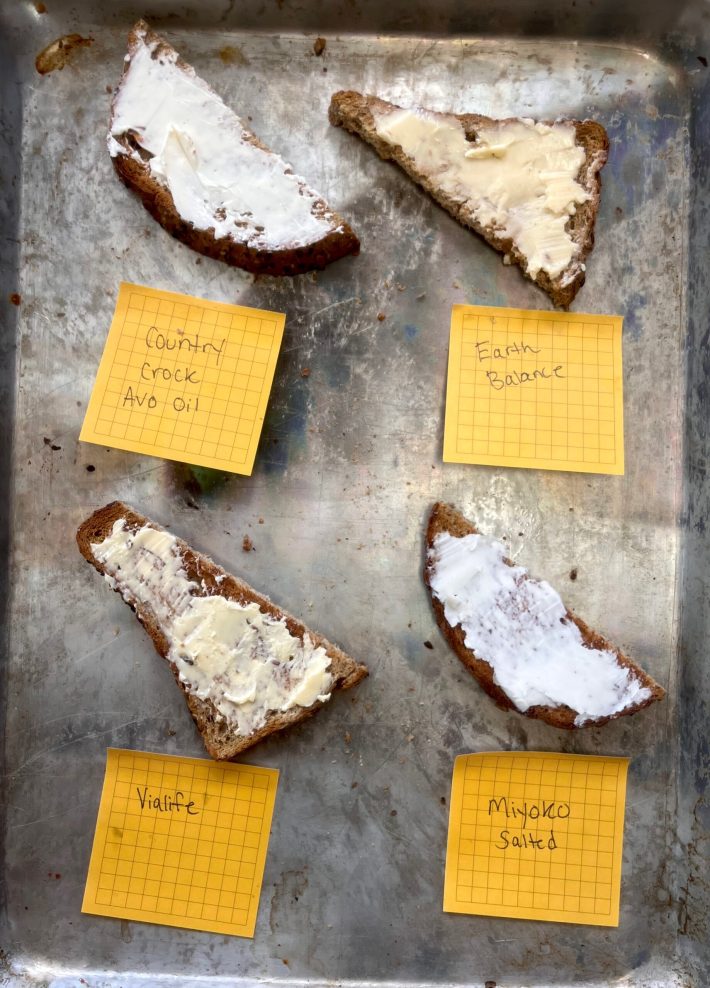
Taste. On toast, we found this one pretty mild. It was very salty (110 mg per tablespoon, which is 20 mg more than in its milk-based equivalent), didn’t have a strong butter flavor, and had an oily mouthfeel.
Bake-ability. We had a hard time handling this dough when raw, and it cracked a bunch in the rolling process. The uncooked pastry doesn’t quite stick to itself, so it was difficult to patch up any cracks. Unsurprisingly, the baked crust broke apart completely when we went to slice it.
Appearance. It’s pale white and reminds us of Breakstone’s whipped butter.
Rating. 🧈
Earth Balance Vegan Buttery Sticks
Earth Balance has been in the no-cow butter game for more than 15 years and has a swath of stick and tub options. The buttery sticks come in 16-ounce boxes of four sticks in salted, unsalted, or soy-free varieties. The down-the-middle offering is made from a blend of oils including canola, flaxseed, soybean, and palm oil. The salted option is more readily available, so we went with that and used less salt in the dough to compensate.
Texture. The sticks slice and cube up like butter out of the fridge but still spread easily.
Taste. Earth Balance products have a distinctive margarine taste that is pretty salty (120 mg of sodium per tablespoon) and, for lack of better words, fake.
Bake-ability. The dough was almost too firm and took a long time to soften enough to roll out. The crust browned well all over and had a good flavor, but in areas where the dough was thicker (like along the crimped edges), it was dry and too bready.
Appearance. The individually wrapped sticks have a yellow-y hue similar to butter.
Rating. 🧈🧈🧈
Miyoko’s European Style Plant Milk Butter
Miyoko’s butter is made from coconut oil and cashew milk, with a little something extra—it’s fermented with vegan cultures, which adds a tang common in European butters. It comes in 8-ounce blocks, and I tried two varieties: salted, which we tasted on toast, and unsalted, which we used for the bake test. The ingredient list is brief, but the inclusion of cashews is a mixed bag, sustainably speaking. Though they’re not included in the go-to analysis of plant-based milks, we can broadly think of them the way we would almonds, their tree nut cousins: They’re a thirsty crop, but the trees generally use up far less land than dairy cows to produce a similar amount of food.
Texture. Straight out of the fridge or freezer, the block is very crumbly, so trying to cube it up for the pie dough is a bit of a challenge. It softens up quickly and becomes spreadable at room temperature, but it’s not as smooth as some of the other brands.
Taste. As the name implies, the salted sticks were the closest to the fancy European butters we buy specifically for smearing on bread. It has a slight tang and umami quality, likely because of the cultured cashews.
Bake-ability. The pie crust browns pretty evenly on the top and bottom. Out of all the pastries, this was the most stable and easiest to handle. It also had the best flavor—the perfect balance of salty and sweet—and baked up flaky and tender.
Appearance. Similar to the Country Crock, this spread has a pale white color that’s more similar to cream cheese than it is to butter.
Rating. 🧈🧈🧈🧈
Violife Plant Butter
Violife is a big player in the vegan cheese market. (We’re fans of its feta). Their plant-based butter replacement is made from coconut, sunflower, and canola oils and is free from nuts, soy, and palm oil. It comes as an 8.8-ounce block in salted and unsalted varieties, but the latter proved impossible to find at my local stores. To adjust, we lowered the salt in the pie dough recipe.
Texture. It’s as solid as real butter when it’s chilled, and as smooth and spreadable at room temp.
Taste. Just like butter! Plain and simple.
Bake-ability. Overall the crust was evenly browned and flaky, but despite the butter’s being salted, the crust was oddly lacking in flavor. The thicker crimped parts were also a tad dry, similar to the Earth Balance results.
Appearance. This butter has a yellow (yet not as yellow as Earth Balance) hue that looks the most similar to the real thing of the bunch.
Rating. 🧈 🧈 🧈
The Results:
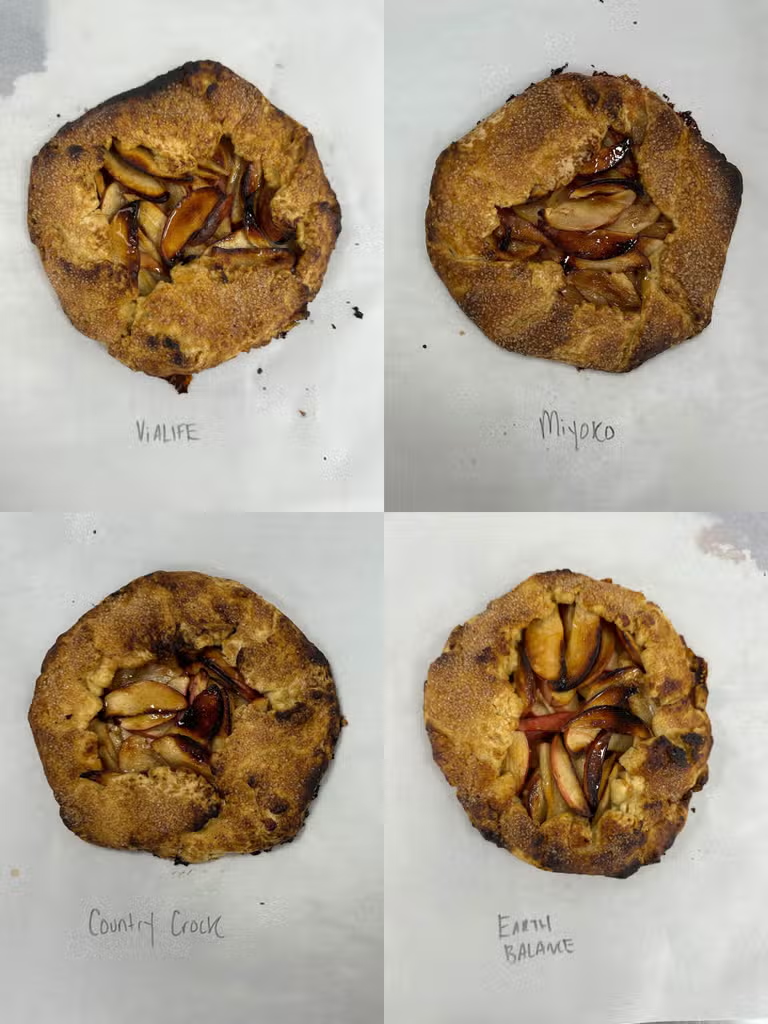
While all the butters delivered a pretty evenly browned crust, the Miyoko’s is the all-around winner for texture and flavor (in pastry and on toast). Earth Balance takes second for crust, and Violife grabs runner-up for bread slathering. We’re especially impressed with how well Miyoko’s baked up considering how much it crumbled when we was cubing it. It seems that all those little shards led to more pockets of steam when the water evaporated in the oven, creating a super flaky dough. We knocked off a 🧈 on both baking picks because of their imperfect ingredient lists, and Violife deserves its planet-friendly kudos.