
Laundry, one of life’s great unavoidables. Also one of a home’s biggest energy hogs: About 10% of your household’s energy goes toward cleaning and drying duds. Luckily, it’s actually pretty easy to make your wash-day routine easier on the planet—and your pocketbook. Here are three quick ways to shrink the electricity consumption associated with washing your clothes, while preserving the quality of your favorite fits.
Use cold water
Around 90% of the power a washing machine uses goes into heating up water, according to Energy Star. One 2022 study in the E.U. found that lowering the water temperature from warm to cool can cut electricity usage by 30%, and running a load on hot uses twice as much energy as a load at warm. Switching from warm to cold water can save 3.2 kilowatt hours per load, according to the American Cleaning Institute. Calculated over a full year of washes (between 300 and 390 on average), that’s enough to run your fridge for around 10 months. And don’t worry about your stuff staying stanky: Most modern detergents are effective in cold water and most clothes don’t need to be washed at high temperatures to get clean.
Run full loads in the washer
This should go without saying, but it takes the same amount of energy to wash a full load as a half-full one for most machines. Running a whole bunch of mini loads is a quick way to rack up excess energy and water consumption. At the same time, underloading your washer can lead to a handful of potential problems like an imbalance in the drum, which can make for less clean duds.
Just don’t use a large washer load as a license to cram the dryer to the brim. Pushing your dryer over the limit will leave some clothes still moist and others way too exposed to heat. This is because properly dried clothes require circulation—something that is nearly impossible in a crowded machine. Some garments will end up still moist (and needing another round in the dryer) while others will be overexposed to heat.
Air-dry what you can
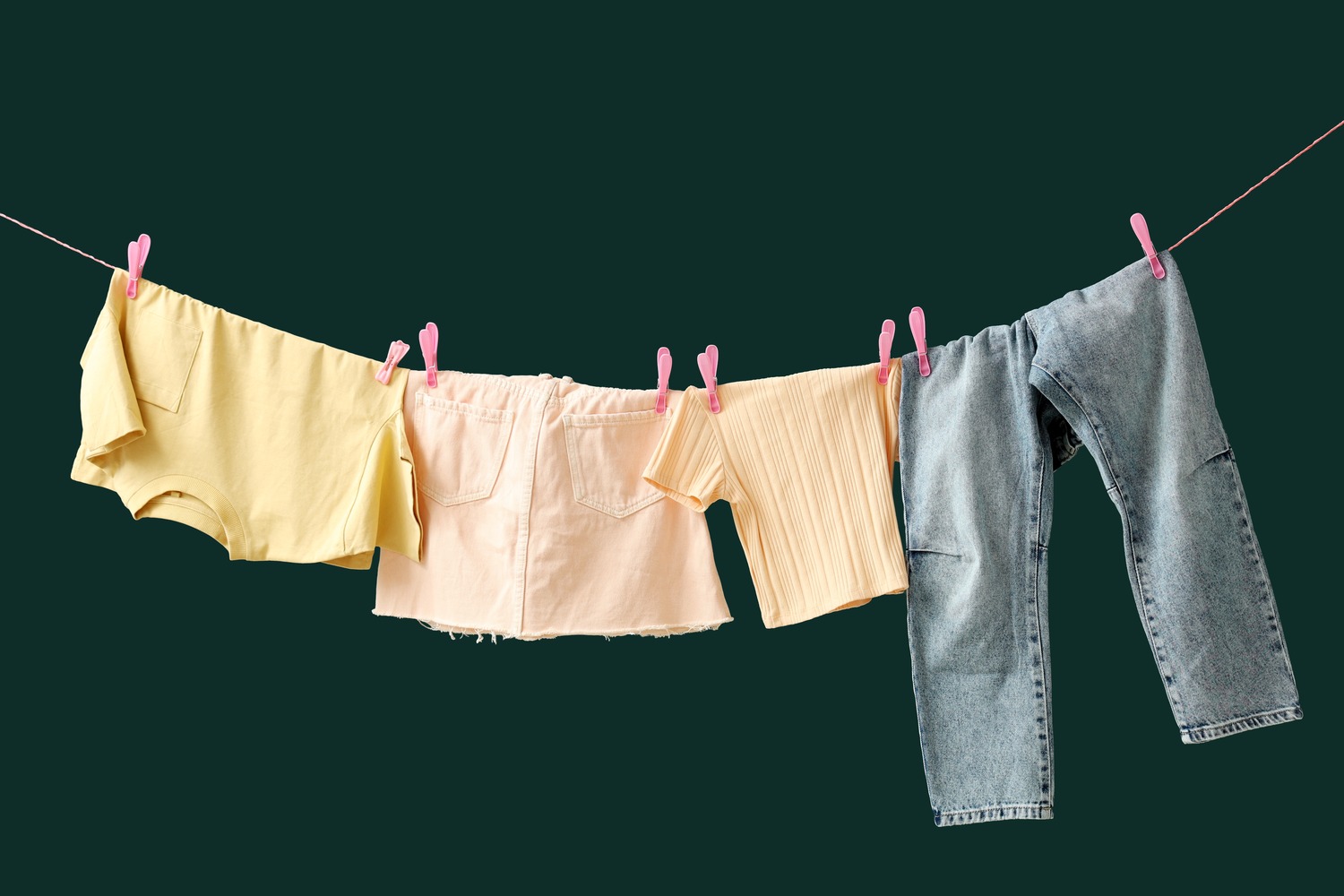
Air-drying cuts out the power drain of machine drying altogether, a task that accounts for about 6% of a home’s electricity consumption. If you go from running a 3,000-watt dryer six days a week to only three days a week, that’d end up saving you around 468 kilowatt-hours of electricity each year, which is equivalent to around 195 kilos of greenhouse emissions.
Remember, that’s per household; scale that digit up to even 10% of the nation’s 122 million households and it’s the greenhouse gas equivalent of taking more than a half-million cars off the road. Not to mention, leaving the dryer out of the equation is good for most textiles, which means our clothes and linens will last longer.